

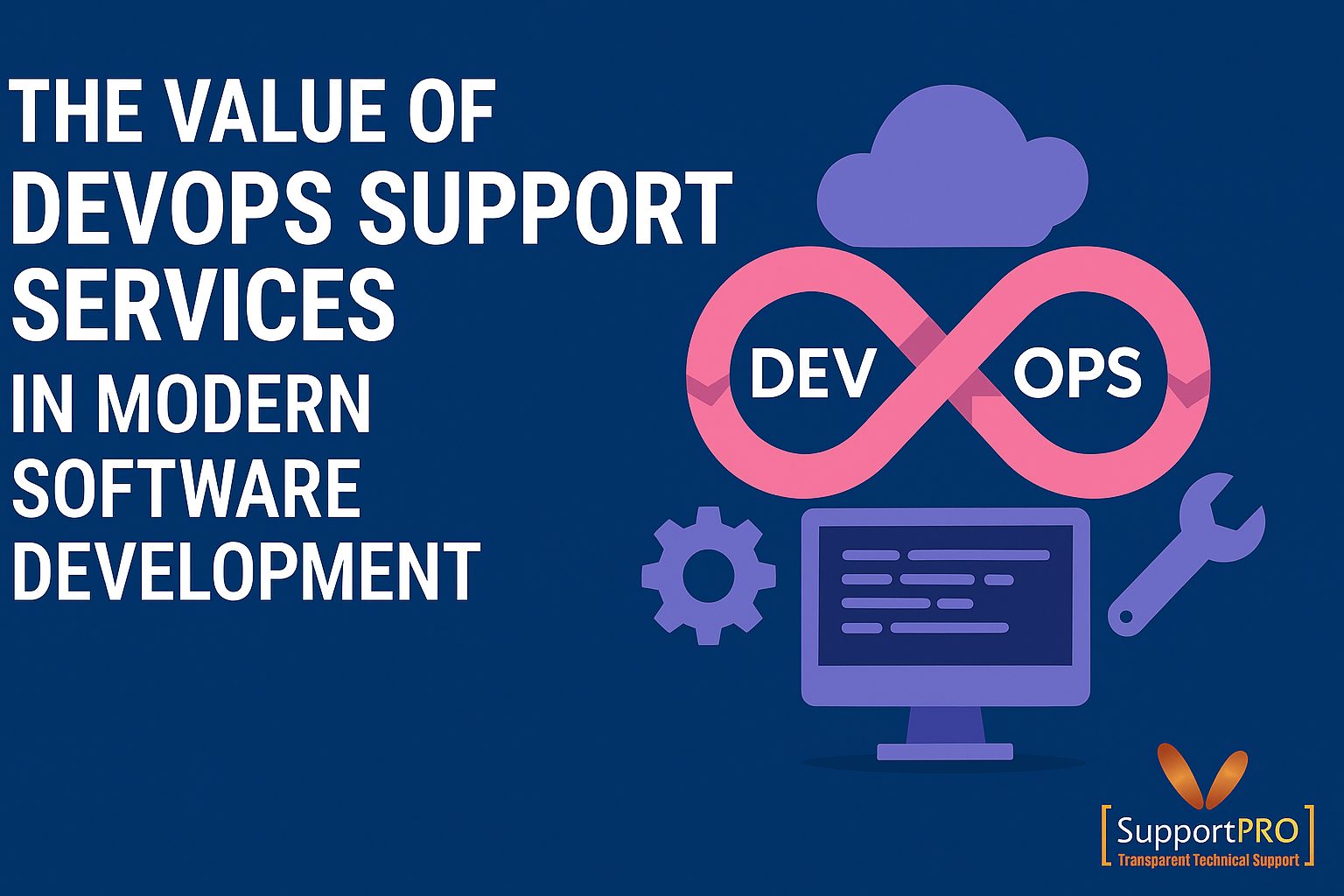
In today’s highly competitive digital landscape, businesses must deliver high-quality software quickly and consistently. To achieve this balance between speed and reliability, organizations increasingly rely on DevOps support services.
DevOps is a set of practices that integrates development, operations, and quality assurance teams to improve collaboration, automate workflows, and streamline the entire software delivery lifecycle.
Evolution of Software Development and the Rise of DevOps
Software development has evolved significantly over time. Earlier, development and operations teams worked in isolation, which often led to delays, miscommunication, and inefficient deployment processes.
However, as applications became more complex and user expectations increased, traditional methods started to fall short.
As a result, organizations began adopting DevOps to bridge the gap between teams and improve delivery speed. DevOps emphasizes:
- Continuous collaboration
- Automation across workflows
- Continuous improvement
- Faster and more reliable deployments
In addition, it removes silos between development and operations teams, enabling smoother and more efficient software delivery.
Why Organizations Need DevOps Support Services
Adopting DevOps support services helps businesses implement DevOps principles effectively and at scale.
1. Improved Collaboration
DevOps brings together development, operations, and QA teams into a unified workflow. Consequently, communication improves, responsibilities are shared, and decisions are made faster and more accurately.
2. Faster Delivery
With streamlined processes, organizations can release software more frequently and reduce time-to-market significantly.
3. Higher Software Quality
Continuous testing and monitoring help identify issues early, resulting in more stable releases.
4. Process Automation
DevOps support services automate repetitive tasks such as testing, deployment, and monitoring. Therefore, teams can focus more on innovation rather than manual work.
Key Components of DevOps Support Services
Collaboration and Communication
DevOps encourages cross-functional teamwork, ensuring all stakeholders work toward shared goals.
Automation
Automation reduces manual intervention in testing, deployment, and monitoring, improving efficiency and reducing errors.
CI/CD (Continuous Integration & Continuous Delivery)
CI/CD pipelines automate code integration, testing, and deployment. As a result, software reaches production faster with fewer risks.
Infrastructure as Code (IaC)
IaC allows infrastructure to be managed through code. This ensures consistency, scalability, and easier maintenance of environments.
How to Implement DevOps Support Services
1. Assess Current Processes
Evaluate existing workflows to identify gaps in collaboration, automation, and deployment efficiency.
2. Define Clear Goals
Set measurable objectives such as faster deployment, improved quality, or better customer satisfaction.
3. Build a DevOps Roadmap
Create a structured plan outlining tools, timelines, and required improvements.
4. Encourage Collaboration
Promote a culture where teams communicate openly and share responsibilities.
5. Choose the Right Tools
Select tools that support your DevOps goals, including CI/CD, monitoring, and automation platforms.
6. Train Your Teams
Ensure teams are equipped with the right skills through training and workshops.
Best Practices for DevOps Success
- Start small and scale gradually
- Automate as many processes as possible
- Promote continuous learning and experimentation
- Monitor systems and measure performance regularly
- Encourage collaboration and knowledge sharing
Essential DevOps Tools and Technologies
- Version Control: Git, SVN
- CI/CD Tools: Jenkins, Travis CI, CircleCI
- Configuration Management: Ansible, Puppet, Chef
- Containers: Docker, Kubernetes
- Monitoring Tools: Prometheus, Grafana, ELK Stack
Measuring DevOps Success
To evaluate DevOps effectiveness, organizations should track key performance metrics:
Deployment Frequency
Measures how often updates are released to production.
Lead Time
Tracks the time taken from code commit to deployment.
Change Failure Rate
Measures the percentage of deployments that fail in production.
Mean Time to Recovery (MTTR)
Indicates how quickly systems recover from failures.
Customer Satisfaction
Evaluates user experience through feedback and satisfaction scores.
Conclusion
DevOps support services play a critical role in modern software development by improving collaboration, automating processes, and accelerating delivery. Ultimately, organizations that adopt DevOps successfully gain a competitive advantage through faster innovation, higher quality software, and improved customer satisfaction.
If you require help, contact SupportPRO Server Admin
Facing issues?
Our technical support
engineers can solve it.


