

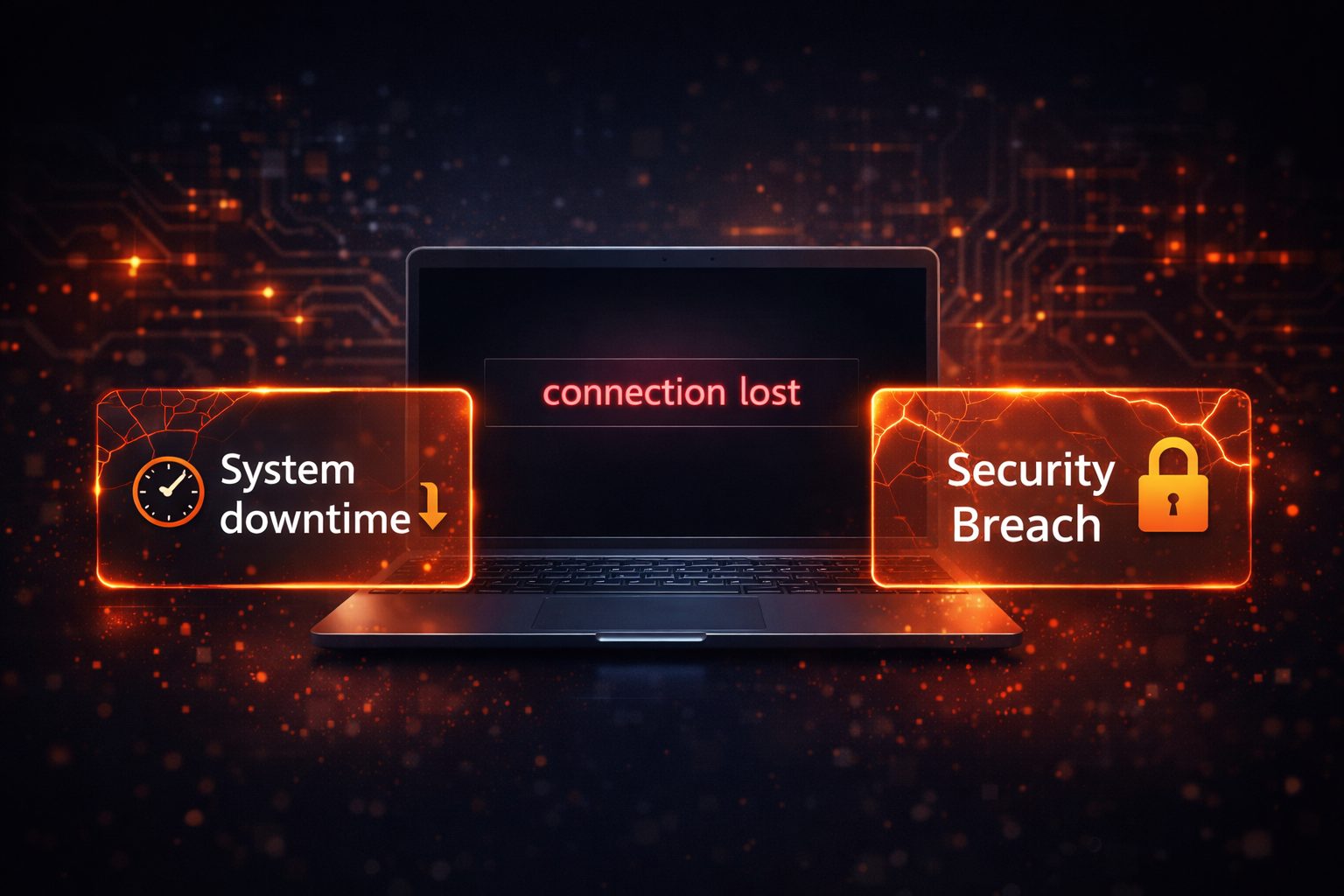
Servers sit at the core of business operations. Applications, customer data, internal systems, and digital services all depend on them. When server management is weak, the impact shows up quickly in the form of service outages, slow performance, and security incidents. For business leaders, poor server management is not an IT inconvenience. It is a direct risk to revenue, reputation, and operational continuity.
What Happens When Server Management Is Poor ?
- Reactive Maintenance : When servers are managed reactively, issues are addressed only after failure occurs. This approach allows small performance problems to grow into major outages, increasing downtime and forcing teams into emergency fixes that disrupt business operations.
- Missed Updates : Operating systems and server software require regular updates to fix bugs and vulnerabilities. Poor management often results in delayed or skipped updates, leaving servers exposed to known vulnerabilities and bugs, increasing security risk when patches are not applied through a controlled update process.
- Configuration Drift : Over time, server configurations change due to manual updates, quick fixes, or inconsistent processes. Without proper controls, these changes lead to unpredictable behavior, compatibility issues, and failures that are difficult to trace and resolve.
- Resource Exhaustion : Servers need continuous monitoring to ensure CPU, memory, and storage are available when needed. Poor management allows resource exhaustion warnings to go unmonitored, leading to slow performance, crashes, and unplanned interruptions.
- Limited Visibility : Without centralized monitoring and alerts, teams lack real-time insight into server health. Problems go undetected for longer periods, increasing both downtime duration and the likelihood of security incidents going unnoticed.
How Poor Server Management Creates Downtime and Security Risks ?
- Delayed Issue Detection : When monitoring is weak, performance and security issues remain hidden until performance degrades significantly or security issues escalate into incidents. Delayed detection increases downtime and gives attackers more time to exploit vulnerabilities.
- Unpatched Vulnerabilities : Servers that are not regularly patched remain exposed to publicly known security flaws.These weaknesses increase the risk of breaches, malware infections, or emergency remediation actions.
- Misconfigured Systems : Incorrect server configurations can block legitimate traffic, expose sensitive services, or weaken access controls. These errors cause outages and open doors to unauthorized access at the same time.
- Weak Access Control : Poorly managed servers often have excessive user permissions. This increases the risk of accidental changes, insider threats, and compromised accounts causing both security incidents and service disruptions.
- Slow Recovery : Without tested backups and recovery plans, restoring servers after a failure or attack takes longer. Extended recovery times increase business downtime and data loss risk.
What Effective Server Management Looks Like ?
- Proactive Monitoring : Continuous monitoring identifies performance issues and security threats early. This allows teams to resolve problems before they affect users or escalate into incidents.
- Regular Patching : Timely updates keep servers stable and protected. Patch management reduces exposure to vulnerabilities and improves system reliability.
- Standardized Configurations : Using consistent server configurations minimizes errors and simplifies troubleshooting. Standardization reduces both failure rates and security gaps.
- Controlled Access : Clear access policies limit who can make changes to servers. Strong access control reduces the risk of accidental outages and unauthorized activity.
- Backup Readiness : Regular backups and tested recovery processes ensure systems can be restored quickly. This limits downtime and protects critical business data.
Industry Trends Increasing Server Risk
Modern IT environments are becoming more complex. Businesses now rely on hybrid infrastructure, cloud-hosted servers, and always-on digital services. At the same time, cyber threats are growing more frequent and sophisticated. Regulatory requirements are also increasing, making downtime and data breaches more costly than ever. These trends mean that poor server management carries higher risk today than it did in the past.
Conclusion
Poor server management leads directly to downtime and security risks that disrupt business operations. Reactive maintenance, missed updates, weak monitoring, and misconfigurations create failures that affect both system availability and data security. As infrastructure grows more complex, businesses need structured and proactive server management to reduce risk, maintain uptime, and protect critical systems. This is where managed server support providers like SupportPro help organizations maintain reliable and secure operations at scale.
Facing issues?
Our technical support
engineers can solve it.


