
Introduction As businesses increasingly turn to cloud technology for their applications, websites, and daily operations, it’s essential to create a reliable and secure IT environment. Whether you are a startup launching your first product, an eCommerce business handling online transactions, or a growing enterprise managing critical workloads, your cloud infrastructure plays a vital role in your business’s success. One major decision organizations face is whether to build an in-house IT team or partner with a provider that offers cloud support services. Both options aim to keep your systems running effectively, but they differ in cost, expertise, scalability, and the type of support provided. Choosing the right option is not just about outsourcing or hiring staff; it’s about finding the best …
Cloud Support Services
Why Cloud Instances Perform Differently Even with the Same Specs
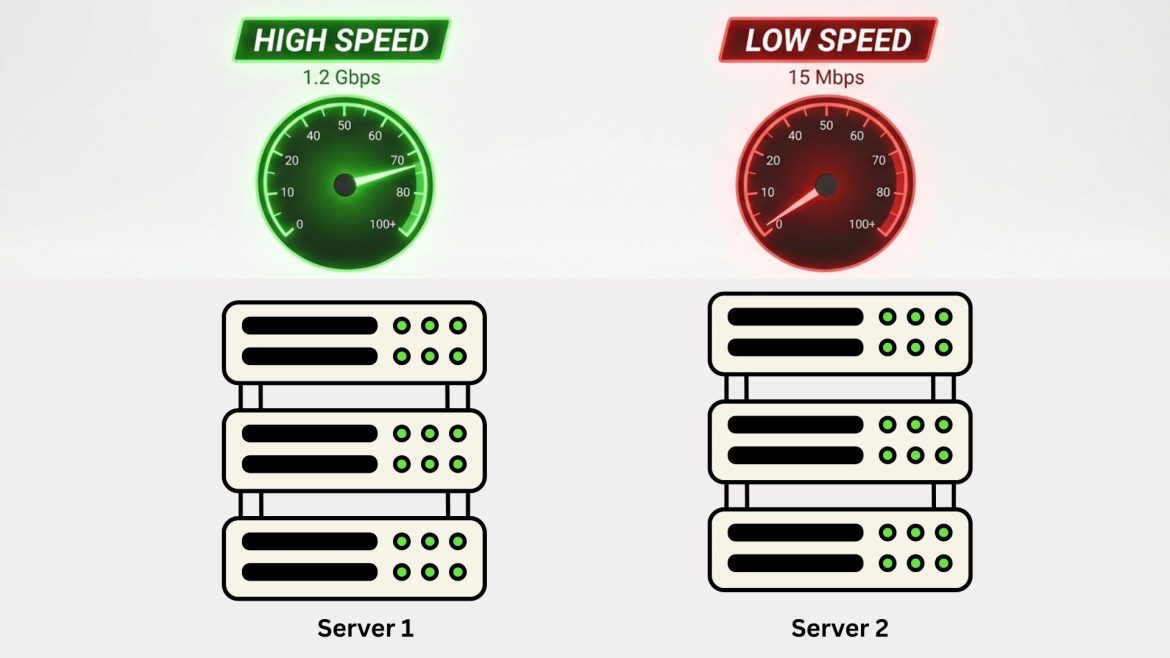
If you have ever launched two cloud instances with identical specifications- same CPU, memory, storage, and operating system, you might expect them to perform exactly the same. In reality, that rarely happens. One instance might boot faster, handle traffic more smoothly, or complete workloads quicker than another, even though both look identical on paper. This inconsistency often surprises engineers, startups, and DevOps teams. After all, cloud providers advertise standardized virtual machines. So why does performance still vary? In this article, we’ll explore the real reasons cloud instances behave differently despite having the same specs, and what you can do to minimize unpredictable performance. 1. The Hidden Layer: Virtualization and Shared Hardware Cloud instances are virtual machines running on physical servers …
Why “Cloud” Servers Still Go Down: Common Operational Mistakes
The word cloud often gives businesses a false sense of invincibility. Many assume that once systems move to AWS, Azure, or Google Cloud, outages become someone else’s problem. After all, cloud platforms promise high availability, redundancy, and scalability. Yet outages still happen and often in dramatic, business-disrupting ways. From e-commerce downtime to SaaS platform crashes, “the cloud” regularly reminds organizations that technology alone does not guarantee reliability. So why do cloud servers still go down? The answer usually isn’t the provider’s infrastructure. It’s operational mistakes made by the people designing, configuring, and managing cloud environments. Let’s explore the most common reasons cloud servers fail and what organizations can do to prevent them. 1. Treating the Cloud Like a Traditional Data …
No one can forget a 403 error in Google Cloud. The resource in question was validated to be present, and the permissions seemed to be set up correctly. However, met with a 403 Permission Denied message. If you’ve ever been there, you know how annoying this error can be. So let’s slow this down and talk about what a 403 error really means, why it keeps popping up, and how to usually fix it in the real world. What a 403 Error in Google Cloud Actually Means ? A 403 error in Google Cloud means that Google Cloud understands who you are, but it won’t let you do what you’re asking. That’s different from a login issue. Your identity is fine. …
How to Fix 502 Bad Gateway: Why IP Works but Domain Fails – Reverse Proxy Guide
When you see a 502 Bad Gateway error , it can be frustrating, especially when your website works perfectly fine using the server’s IP address, but breaks when you access it through the domain name. It’s a very common issue that happens when you’re using a reverse proxy such as Nginx, Apache, or HAProxy. In this blog, we explained why it happens, and how you can fix it by following the steps one by one.
If you’ve managed a website before, chances are you are familiar with cPanel. It’s been the most popular panel for years. Reliable, familiar, and packed with features. Then there’s RunCloud a newer player built for modern cloud servers. It’s lighter, faster, and built with developers in mind.
Autoscaling in Kubernetes: Everything You Need to Know About Karpenter & CA
You launch your shiny new app on Kubernetes. Everything’s humming along nicely, users are happy, and you start to relax. Then out of nowhere, traffic spikes. Pages crawl, users complain, requests start failing. Panic mode: you scramble to add more servers. The storm passes, your app recovers, and now you’re stuck paying for all those extra machines that barely do anything once traffic calms down. If that story feels a little too familiar, welcome to the age-old cloud problem: Overprovision, and you burn money.Underprovision, and your users pay the price. The good news? Kubernetes actually has a built-in way to save you from this mess: autoscaling. With it, your cluster grows when you need extra muscle and shrinks when you …
Let’s be real that the cloud isn’t just some buzzword anymore. It’s where almost everything runs these days. By 2025, most companies will be living almost entirely on cloud infrastructure. And honestly, it makes sense. The big platforms like AWS, Google Cloud, and Microsoft Azure give you endless power, worldwide reach, and the ability to scale up or down in minutes. Discover how cPanel & WHM streamline server management on AWS, Azure, and GCP. Get more control, security, and flexibility
Affordable Hybrid Cloud Strategies
Introduction Cloud adoption has revolutionized business operations, but the biggest challenge for most businesses is to reconcile performance and cost. Businesses centered solely on the public cloud end up with skyrocketing bills, while those centered on private, in-house infrastructure struggle to expand fast. That is why the hybrid cloud model, which is an integration of private and public clouds, has become a common practice. Hybrid cloud model provides organizations with the benefits of using both public solutions such as AWS, Google Cloud, and Azure, and private infrastructure. But without an economical approach, the hybrid solution will lose its cost advantage very quickly. In this blog, we will break down economical hybrid cloud adoption strategies, what are the challenges to overcome …
In 2025, cloud computing is not just a convenience—it’s the backbone of modern business operations. Whether it’s hosting critical applications, managing remote workforces, or deploying AI-powered tools, the cloud is indispensable. But as reliance on the cloud deepens, so do the complexities and risks associated with it. This is where proactive cloud support becomes not just beneficial, but absolutely necessary. In this blog, we’ll explore why proactive cloud support is essential, what it involves, and how it can give businesses a strategic edge. What is Proactive Cloud Support? Unlike traditional reactive support, which responds after an issue occurs, proactive cloud support anticipates, prevents, and resolves problems before they impact business operations. It includes: Think of it as having a cloud …