

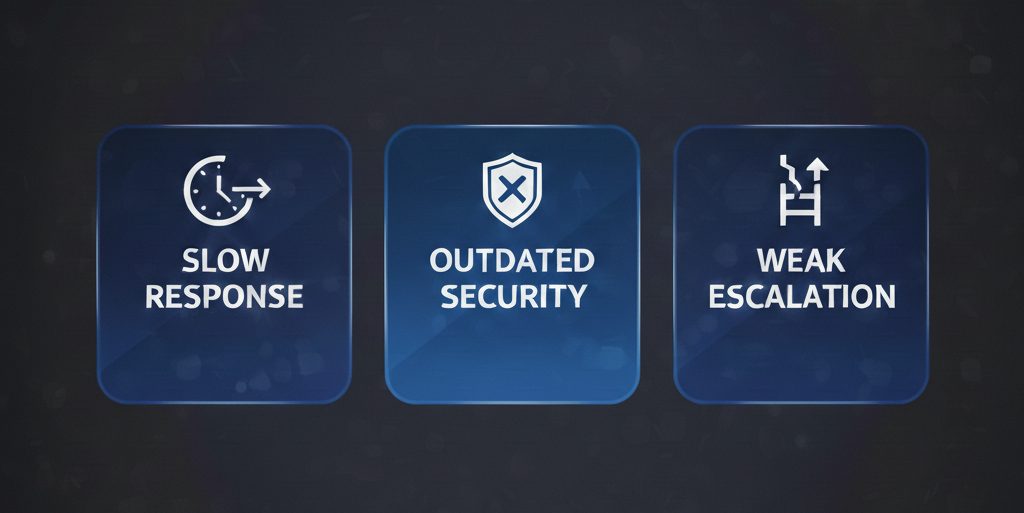
Server support plays a critical role in keeping business systems stable and available. Without consistent support and defined processes, small technical issues can escalate into operational risks.For business leaders, gaps in server support lead to downtime, delayed recovery, data exposure, and service disruptions that directly impact revenue and customer trust.
What Server Support Is Expected to Handle ?
- Incident Response
Server support teams are expected to respond quickly when systems fail or performance degrades. Without timely response, even minor incidents can escalate into outages that disrupt business operations.
- Monitoring and Alerts
Effective server support includes continuous monitoring to detect issues early. When monitoring is missing or unreliable, problems remain unnoticed until users are impacted.
- Patch Assistance
Servers require regular updates to maintain stability and security. Support teams assist with planning, testing, and applying patches according to change management policies, balancing security risk and system stability.
- Backup Support
Server support monitors backup execution and retention, and supports restore testing as defined in recovery procedures Weak backup support increases the risk of data loss and extended downtime during recovery.
- Performance Troubleshooting
Support teams analyze performance issues and identify root causes. Without this capability, systems continue to degrade, leading to recurring failures.
Common Server Support Gaps
- Limited Availability
Support that is only available during business hours leaves systems exposed during nights, weekends, and holidays. A significant number of incidents occur outside standard working hours, when coverage is often limited, increasing downtime.
- Slow Response
Delayed responses extend the time systems remain unavailable. Slow support increases recovery time and magnifies the business impact of incidents.
- No Proactive Monitoring
Without proactive monitoring, support teams react only after failures occur. This reactive approach leads to repeated outages and higher operational risk.
- Weak Escalation
Poor escalation processes delay resolution when issues become complex. Problems bounce between teams, increasing downtime and frustration.
- Missing Documentation
Lack of documentation makes troubleshooting slower and riskier. Each incident takes longer to resolve when server configurations and recovery steps are unclear.
- Skill Gaps
Modern environments include on-premise, cloud, and hybrid servers. Support teams without the right expertise struggle to resolve issues efficiently across different platforms.
How Server Support Gaps Increase Operational Risk ?
- Extended Downtime
Slow response and poor escalation keep systems offline longer. Extended downtime disrupts operations and increases financial loss.
- Repeat Incidents
Without root cause analysis, the same problems occur again. Repeat incidents indicate unresolved issues and ongoing operational risk.
- Data Integrity Issues
Weak backup and recovery support increases the chance of data loss or corruption. Data integrity issues can halt operations and damage trust.
- Compliance Failures
Inadequate support, combined with weak governance and documentation, can contribute to missed updates and audit gaps. Compliance failures expose businesses to penalties and reputational damage.
- Customer Impact
Downtime and service disruptions affect customer experience. Repeated failures reduce confidence and threaten long-term relationships.
Industry Trends Raising Server Support Expectations
Businesses now operate in always-on environments with higher uptime requirements. Hybrid infrastructure, cloud workloads, and stricter SLAs demand faster response and deeper expertise. At the same time, cyber threats are increasing, making rapid detection and recovery more critical than ever. These trends raise the cost of inadequate server support.
What Effective Server Support Looks Like ?
- Continuous Coverage
24/7 support ensures incidents are addressed as soon as they occur. Continuous coverage reduces downtime and limits business impact.
- Clear SLAs
Defined service levels set expectations for response and resolution. Clear SLAs improve accountability and predictability.
- Proactive Prevention
Monitoring and maintenance help prevent incidents before they affect users. Proactive support lowers operational risk.
- Structured Escalation
Clear escalation paths ensure complex issues reach the right experts quickly. This shortens resolution time.
- Documented Recovery
Well-documented processes enable faster and safer recovery. Documentation reduces errors during critical situations.
Conclusion
Server support gaps expose businesses to downtime, data loss, and operational instability. Limited availability, slow response, and lack of proactive monitoring increase risk in modern IT environments. As infrastructure complexity grows, structured and reliable server support becomes essential for maintaining uptime, protecting data, and supporting business continuity. Managed server support providers like SupportPro help businesses close these gaps and reduce operational risk.
Partner with SupportPRO for 24/7 proactive cloud support that keeps your business secure, scalable, and ahead of the curve.


