It’s easy to forget about the load balancer when everything is going well on AWS. But you know how important it is as soon as you start to see wrong responses, weird typos, or health checks that don’t work. A misconfigured health check or a backend server that couldn’t keep up has stopped projects in their tracks. In this post, I’ll walk through AWS Load Balancer troubleshooting, covering common issues with AWS Elastic Load Balancers (ELB, ALB, and NLB), what typically causes them, and proven ways to fix them. 1. …
AWS
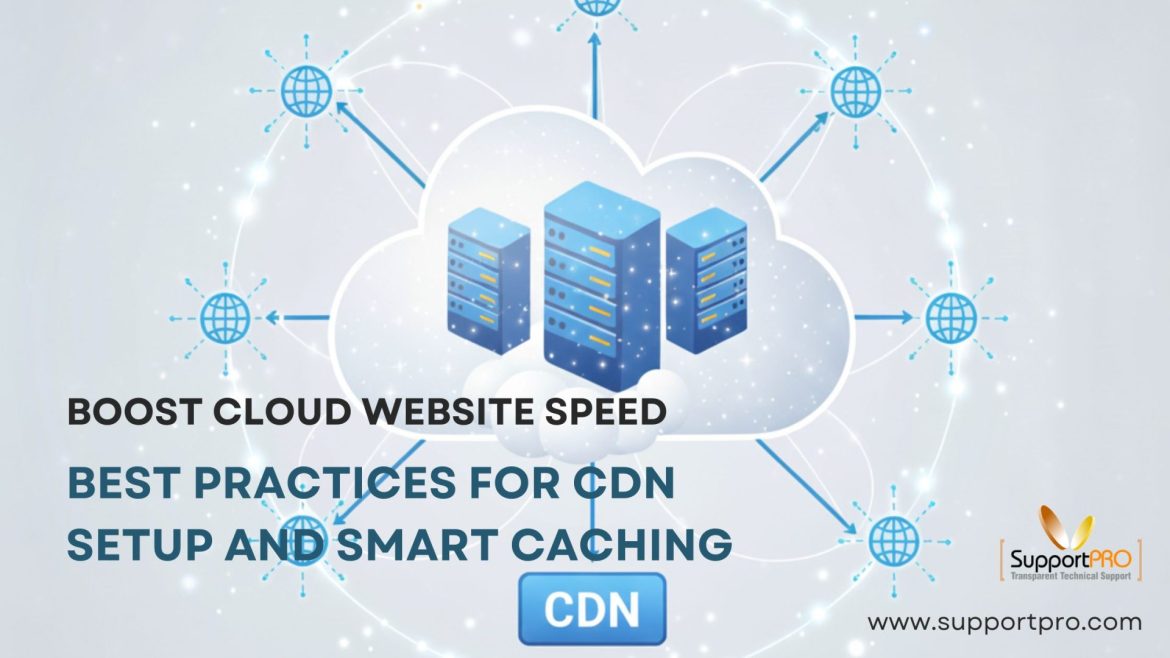
How to Optimize Cloud-Hosted Websites with CDN and Caching – Step-by-Step Guide
While using the web in today’s life, the users expect their pages to load quickly and specifically on mobile & across the globe all over the world. The websites that are hosted in the cloud, and combined with CDN, with smart caching strategies is the most effective path to reduce the latency issues, to reduce the server load and that helps to deliver a faster user experience.
How to Configure a Cloud Mail Server with Postfix/Dovecot) with SSL on AWS
I’ve always been fascinated by how email actually works. You type a message, hit send, and a few seconds later, it shows up somewhere else in the world. There’s a lot happening behind that one click. A while back, I decided to try running my own email server instead of depending on Gmail or Outlook. It wasn’t just about curiosity but also about control. I wanted my data to stay on servers I manage, not in someone else’s giant datacenter. In this post, I’ll walk through how I got Postfix …
Cloud infrastructure has become the backbone of modern applications, and Amazon Web Services (AWS) sits at the center of that ecosystem. From startups to enterprise environments, teams rely heavily on AWS SDKs to build, automate, and scale applications. Whether you’re using: These libraries simplify interaction with services like S3, EC2, DynamoDB, and more. But here’s the reality: AWS libraries are still code.And like any codebase, they can introduce vulnerabilities, misconfigurations, and dependency risks if not managed properly. This guide breaks down common AWS SDK security risks and practical steps to …
Autoscaling in Kubernetes: Everything You Need to Know About Karpenter & CA
You launch your shiny new app on Kubernetes. Everything’s humming along nicely, users are happy, and you start to relax. Then out of nowhere, traffic spikes. Pages crawl, users complain, requests start failing. Panic mode: you scramble to add more servers. The storm passes, your app recovers, and now you’re stuck paying for all those extra machines that barely do anything once traffic calms down. If that story feels a little too familiar, welcome to the age-old cloud problem: Overprovision, and you burn money.Underprovision, and your users pay the price. …
If you have been using cloud services, you must be familiar with Amazon Web Services, Google Cloud, and Azure, the three most prominent players in the cloud computing industry. Although you can adopt a multi-cloud strategy and work with all three, most entrepreneurs want to stick to a single cloud service provider. Each option we’ve discussed in this post is popular for its exceptional services. We’ll compare them on the basis of services, cloud infrastructure, perks, pricing, and other parameters to help you make an informed decision. Understanding Cloud Computing …
Remote Backup Destinations – Configuring remote storage options like AWS S3, Google Drive, or FTP.
Configuring remote backup destinations in JetBackup is a great way to ensure that your backups are stored offsite, providing an extra layer of redundancy and protection. Below are the general steps for configuring remote storage options like AWS S3, Google Drive, and FTP. 1. AWS S3 Configuration Steps: Additionally, JetBackup offers the ability to add a Custom Vendor. If the S3 Provider is not visible when choosing a vendor, please be aware that you can add your S3-compatible destination as a Custom Vendor. Please be aware that in order to …
These days, nearly every business relies on AWS or Google Cloud to power its operations. But here’s the problem: the cloud bills keep climbing higher each month, sometimes with no clear explanation. The convenience of spinning up resources with a few clicks comes with a hidden tradeoff of financial sprawl that creeps up until it becomes a budgetary crisis. Why This Happens: Getting Started with Cloud Cost Savings Before cutting down your cloud expenses, you need to understand what you’re actually paying for. Both AWS Management and GCP Support have …
FinTech companies don’t just use the cloud they depend on it. From processing payments to managing sensitive customer data, cloud infrastructure supports every critical operation. More than 80% of FinTech companies list scalability and infrastructure reliability as top priorities, and for good reason. Whether it’s a startup offering microloans or a large platform handling millions of transactions, cloud support is not optional. The right cloud setup helps avoid compliance penalties, reduces security risks, and ensures systems scale smoothly during growth. This blog explains how FinTech focused cloud support helps companies …
The Power of AWS Snow Family for Seamless Data Migration and Edge Computing
AWS Snow Family is a bunch of physical devices and services provided by Amazon Web Services (AWS). This allows organizations to transfer large amounts of data to or from the AWS Cloud. These devices are particularly useful for environments with limited resources such as limited network connectivity, and unreliable, or cost-prohibitive for transferring massive data entities.