
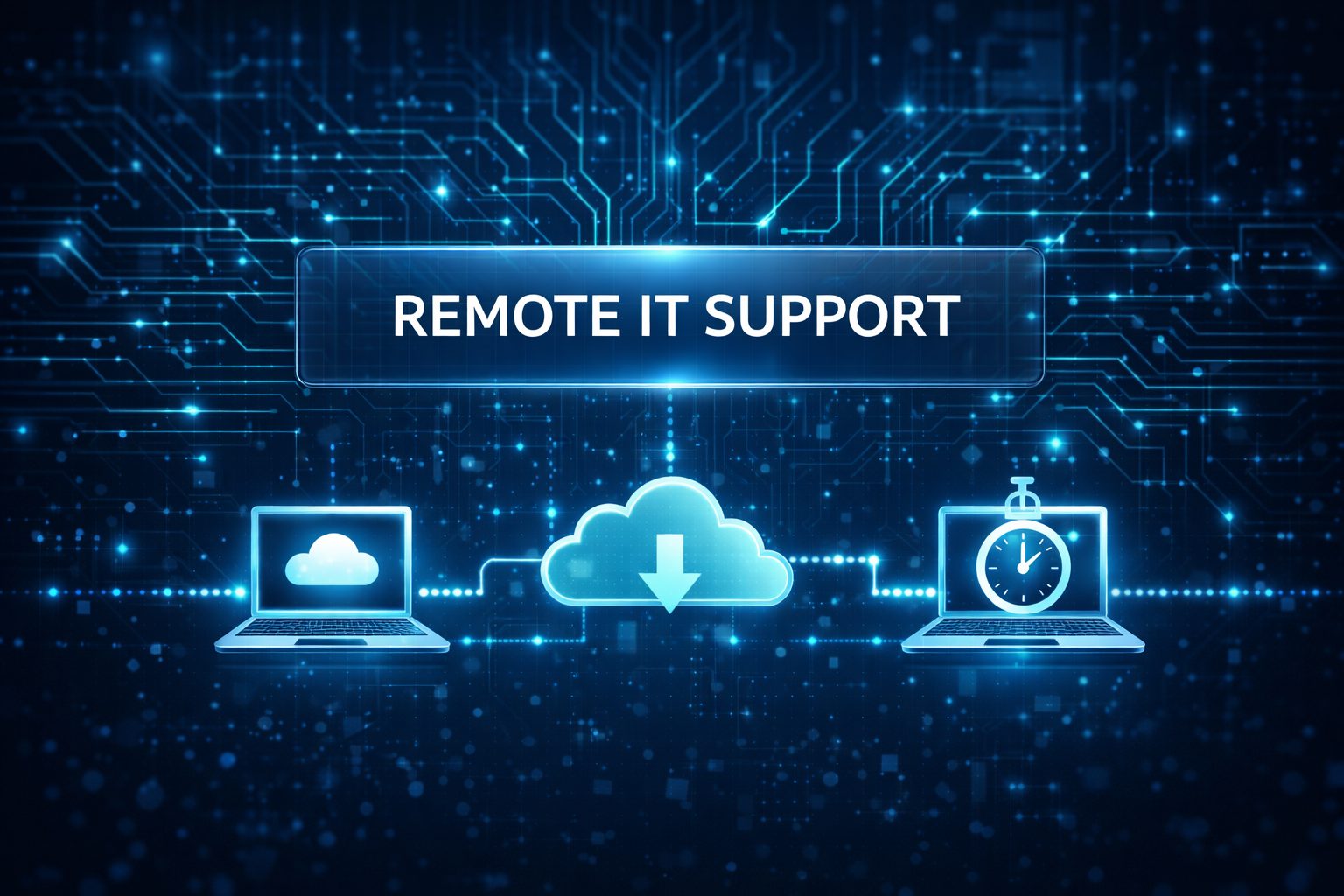
Slow IT issue resolution affects employee productivity, disrupts operations, and increases user frustration. As businesses become more digital and distributed, traditional in house IT support models often struggle to scale coverage, availability, and specialization as environments become more distributed. Remote IT Support enables faster issue resolution by centralizing support, improving availability, and using standardized processes and tools.
What Slows Down IT Issue Resolution in Traditional IT Support
Traditional IT support environments face structural and operational limitations that delay resolution.
- Delayed response : Support requests may remain in queues due to limited staffing, ineffective prioritization, or high volumes of repetitive requests. This increases response time and prolongs user downtime.
- Limited availability : Many in-house IT teams rely primarily on business-hour coverage, with limited after hours support or on-call availability. Issues that occur outside these hours remain unresolved, extending disruptions.
- Manual diagnosis : In some environments, troubleshooting still depends on manual investigation and fragmented tools, slowing root cause identification. This slows root cause identification and resolution.
- Poor visibility : Lack of centralized systems makes it difficult to track issues, device health, and recurring problems. This leads to repeated delays and inconsistent fixes.
- Individual dependency : Where documentation and knowledge sharing are limited, resolution may depend on specific individuals, creating delays when they are unavailable. When those individuals are unavailable, issues remain unresolved.
What Is Remote IT Support
Remote IT Support is a centralized service model that resolves user and system issues using remote tools and standardized processes.
- Central support : All user issues are handled through a unified ticketing and support system. This improves prioritization and tracking.
- Remote tools : Support teams use secure remote access tools to diagnose and fix issues without waiting for physical access. This reduces resolution time.
- Skilled teams : Incidents are triaged centrally and routed to support engineers based on skill sets, priority, and availability.This improves accuracy and speed.
- Standard workflows : Issues are resolved using predefined processes and escalation paths. This ensures consistency and faster outcomes.
How Remote IT Support Speeds Up Issue Resolution
Remote IT Support removes common bottlenecks that delay traditional support.
- Centralized tickets : All issues are logged, categorized, and prioritized in one system. This prevents tickets from being missed or delayed.
- 24/7 support : Support is available at all times, ensuring issues are addressed as soon as they occur. This reduces downtime significantly.
- Faster diagnosis : Remote access enables immediate inspection of systems and user devices. This shortens troubleshooting time.
- Standard processes : Repeatable workflows reduce guesswork and speed up resolution. Common issues are resolved quickly using known fixes.
- Automation support : Where approved, common low-risk tasks such as password resets or service restarts can be automated, reducing response time. This resolves issues instantly without manual intervention.
Industry Trends Driving Remote IT Support Adoption
Business and technology shifts are accelerating the move to Remote IT Support.
- Remote work : Distributed teams require support that is not location dependent. Remote IT Support enables consistent assistance across geographies.
- User expectations : Employees expect fast issue resolution similar to consumer-grade digital services. Slow support impacts satisfaction and productivity.
- Talent shortage : Hiring and retaining skilled IT support staff is increasingly difficult. Remote support provides access to broader expertise.
- Cost pressure : Organizations seek efficient support models that reduce operational costs. Remote IT Support lowers overhead without reducing service quality.
When Businesses Should Adopt Remote IT Support
Remote IT Support becomes essential under growing operational pressure.
- Frequent delays : Repeated delays in resolving user issues impact productivity and morale. Remote support improves response consistency.
- Growing teams : As the workforce expands, internal support teams struggle to scale. Remote support scales without added headcount.
- Support overload : High ticket volumes overwhelm in-house teams. Centralized remote support improves handling capacity.
- Operational impact : Unresolved IT issues begin affecting business operations and customer experience. Faster resolution becomes critical.
Conclusion
Faster IT issue resolution is essential for maintaining productivity and operational efficiency. Remote IT Support enables businesses to resolve issues quickly through centralized handling, continuous availability, and standardized processes. Providers like SupportPro help businesses implement Remote IT Support to reduce delays, improve user experience, and keep operations running smoothly.
Partner with SupportPRO for 24/7 proactive cloud support that keeps your business secure, scalable, and ahead of the curve.


