


Growth increases system demand before it increases revenue. Server scalability ensures your infrastructure handles that demand without slowing down performance. When scalability is planned correctly, users experience stability even during traffic spikes, product launches, or expansion phases.
Below is a practical, structured approach to building scalable server infrastructure that supports both performance and growth.
Server Scalability: Protect Performance as Demand Increases
Server scalability means your systems can handle increasing traffic, users, and data without degradation. For founders, this directly impacts customer experience, retention, and revenue protection. Stable systems build trust, while unstable systems drive churn.
Scalability is not about reacting to failures. It is about preparing infrastructure before growth stresses it.
Establish Performance Baselines Before Making Changes
Scaling without data creates unnecessary cost and risk. You need clear visibility into how your infrastructure behaves under normal and peak traffic conditions.
Track response time, CPU and memory usage, database performance, and error rates. These metrics show where pressure builds as traffic increases.
Use monitoring tools like Datadog, New Relic, Prometheus, and Grafana to monitor real traffic patterns over 30–60 days. Identify when performance degrades and which component is under strain. This insight guides accurate scaling decisions.
Vertical and Horizontal Scaling: Choose the Right Growth Model
Scaling infrastructure requires selecting the right structural approach. The two primary models are vertical and horizontal scaling, and each serves a different stage of growth.
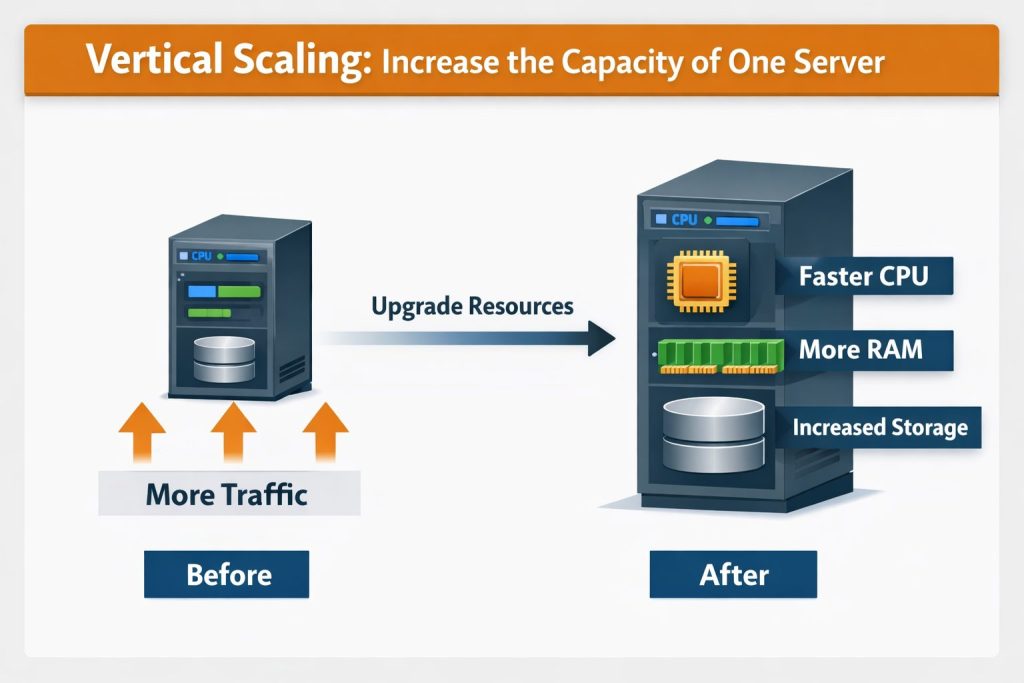
Vertical Scaling: Increase the Capacity of One Server
Vertical scaling improves performance by upgrading an existing server’s CPU, memory, or storage. This approach works well for early-stage products with predictable workloads and simpler architectures.
Upgrading server instances or increasing database memory can quickly improve performance. However, every server has a maximum limit. Once that ceiling is reached, further growth requires a different approach.
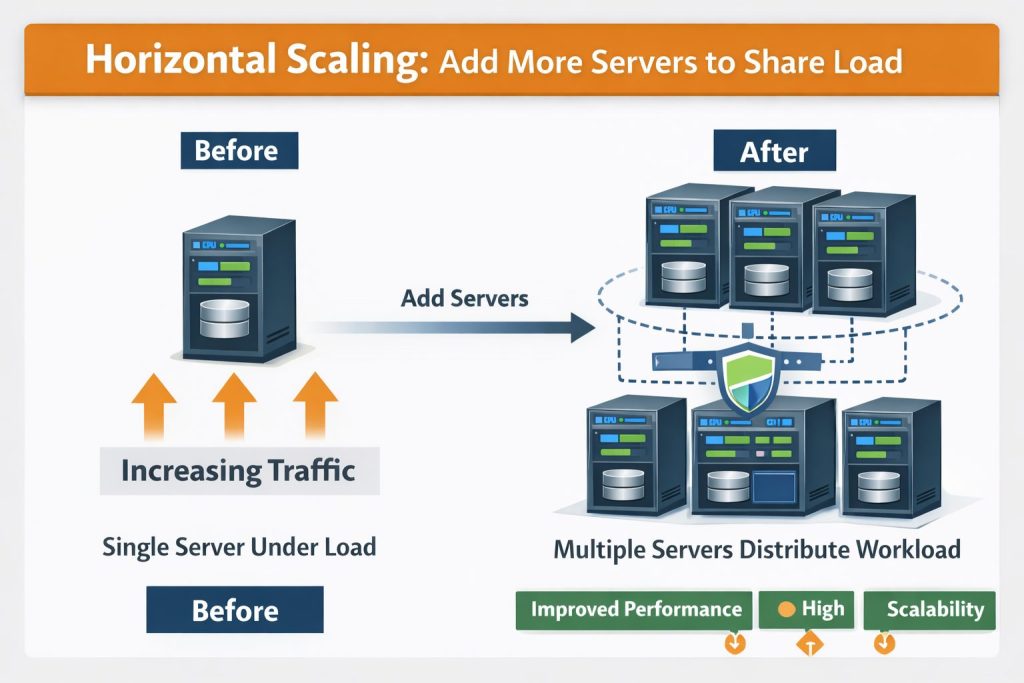
Horizontal Scaling: Add More Servers to Share Load
Horizontal scaling improves capacity by adding multiple servers instead of enlarging one. This method supports rapid or unpredictable growth and improves reliability.
Deploying multiple application servers and separating web, application, and database layers distributes workload effectively. This structure removes single points of failure and supports long-term expansion.
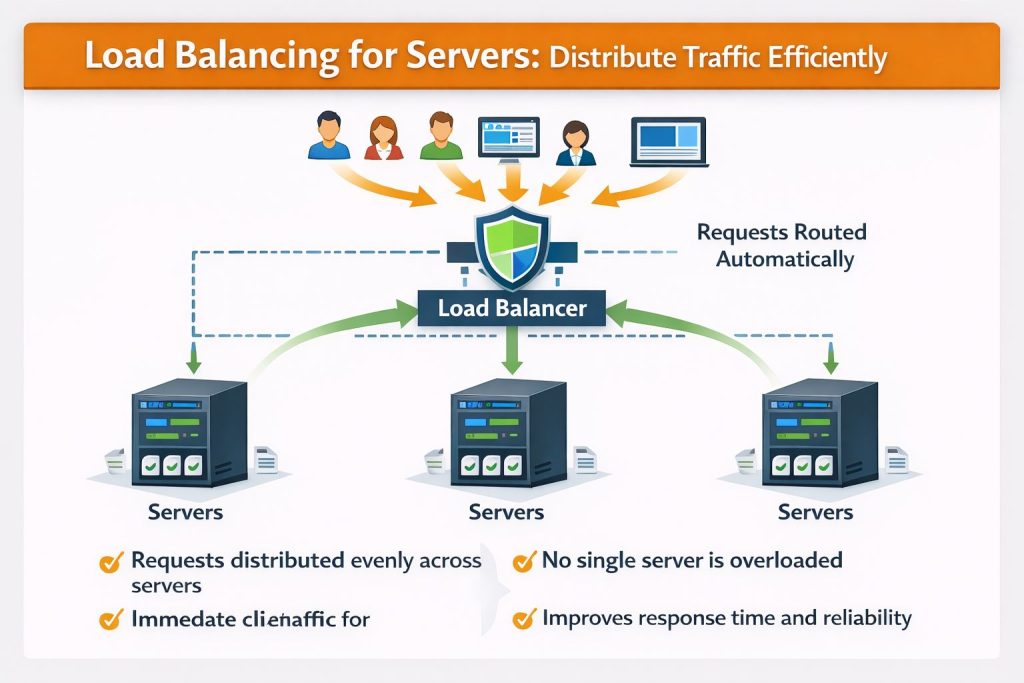
Load Balancing for Servers: Distribute Traffic Efficiently
Adding servers alone does not improve performance unless traffic is evenly distributed. Load balancing for servers ensures incoming requests are shared across available instances.
Deploying a load balancer in front of application servers prevents overload on any single machine. Health checks automatically remove failing servers, maintaining uptime. This step turns horizontal scaling into measurable performance gains.
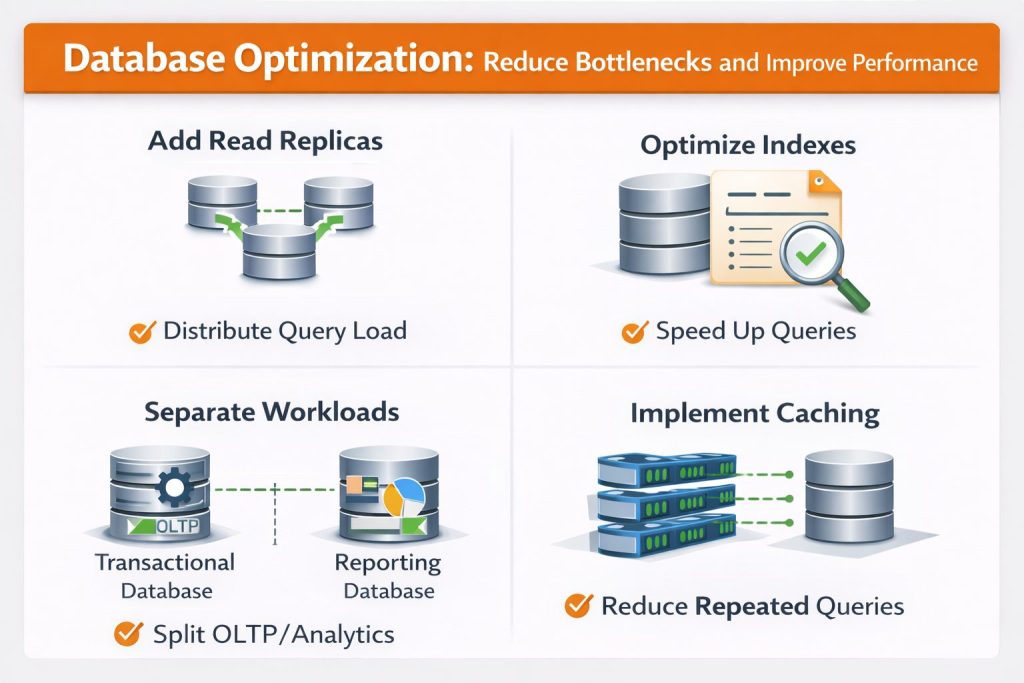
Database Optimization: Remove the Most Common Bottleneck
Databases often become the first constraint during growth. Scaling application servers without optimizing the database only shifts the bottleneck.
Adding read replicas distributes heavy query traffic. Optimizing indexes improves query speed. Separating transactional and reporting workloads prevents competition for resources. These measures protect performance as user activity increases.
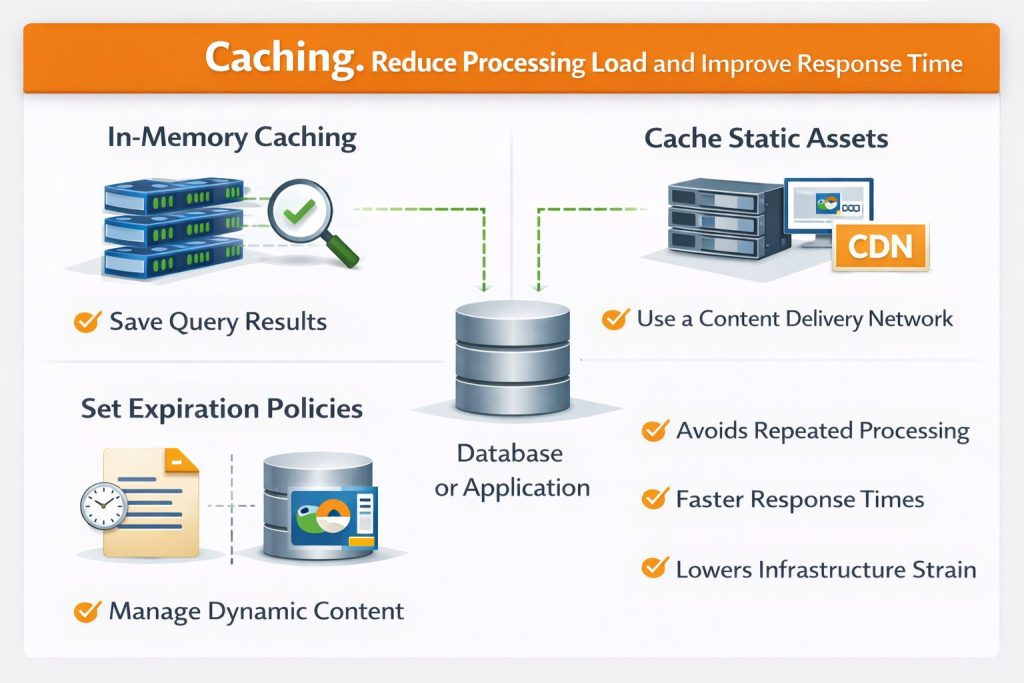
Caching: Reduce Repeated Processing
Not every request requires real-time computation. Caching reduces server and database strain by storing frequently accessed data temporarily.
In-memory caching for repeated queries lowers processing time. Caching static assets reduces backend load. Proper expiration policies ensure data remains accurate while improving speed. Caching delivers immediate performance improvements with controlled cost.
Cloud Server Scalability: Expand Without Hardware Constraints
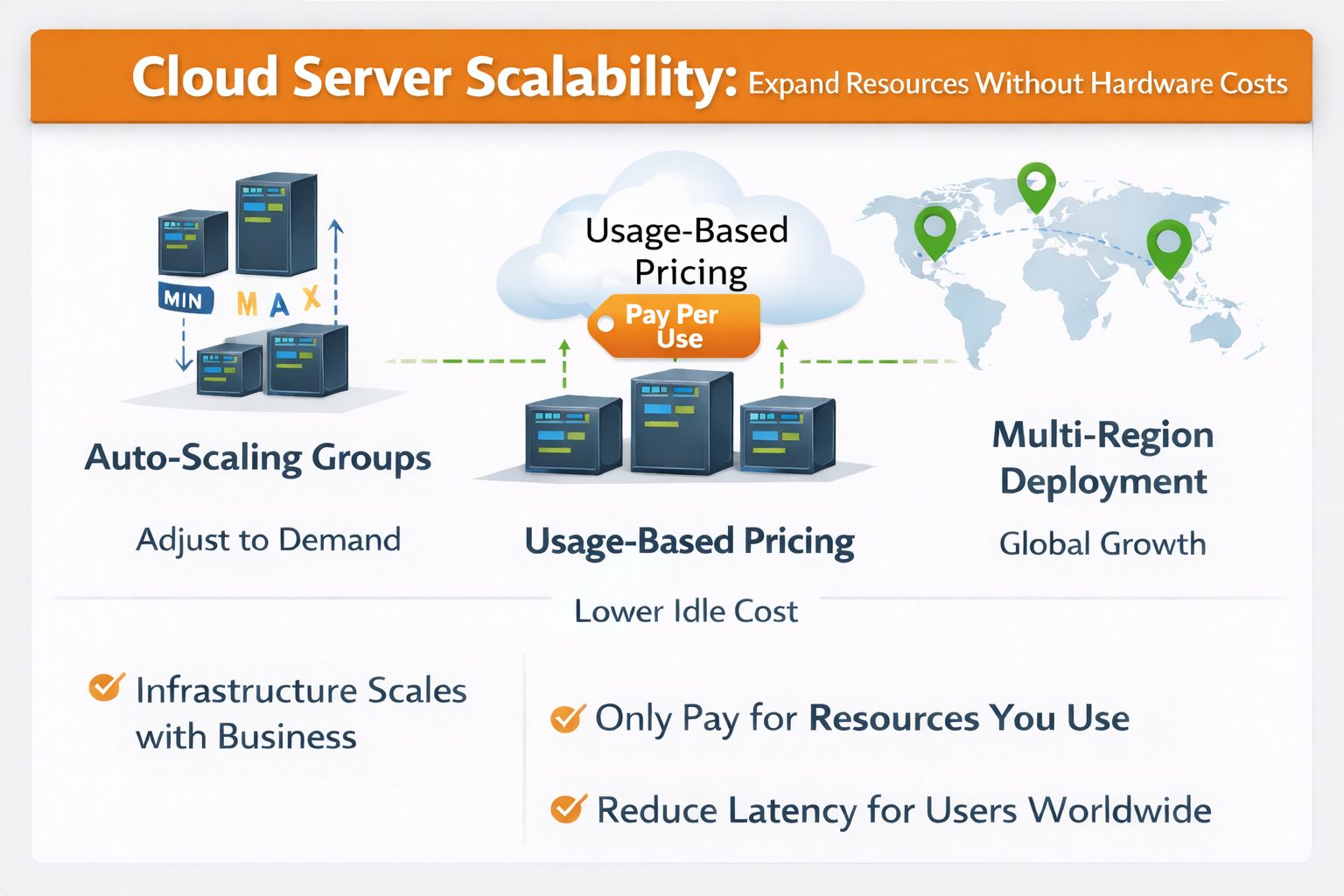
Cloud server scalability allows infrastructure to grow or shrink based on real demand. This flexibility eliminates the need for large upfront hardware investment.
Auto-scaling groups adjust server capacity automatically when traffic changes. Usage-based pricing reduces idle cost. Multi-region deployment supports global growth. Cloud environments provide agility that traditional infrastructure cannot match.
Redundancy: Protect Availability During Failures
Performance alone is not enough. Systems must also remain available during unexpected failures.
Deploying servers across multiple availability zones reduces outage risk. Automated backups protect critical data. Failover configurations ensure continuity if one component fails. Redundancy protects both revenue and reputation.
Automation: Respond to Growth Without Manual Intervention
Manual infrastructure management cannot keep pace with sudden traffic spikes. Automation ensures systems adjust instantly.
Configuring automatic scaling thresholds adds or removes servers based on load. Infrastructure-as-code enables consistent deployment across environments. Real-time alerts allow quick response when performance shifts. Automation maintains stability during growth events.
Continuous Review: Keep Scalability Aligned with Business Growth
Scalability is not a one-time setup. As products evolve, usage patterns change.
Quarterly performance reviews identify emerging constraints. Load testing before major releases reduces launch risk. Tracking infrastructure cost relative to revenue ensures efficiency. Regular evaluation keeps scalable server infrastructure aligned with business strategy.
Build Scalable Server Infrastructure That Supports Sustainable Growth
High performance strengthens customer trust. Reliability protects revenue.
By combining performance monitoring, vertical and horizontal scaling, load balancing for servers, database optimization, caching, cloud server scalability, redundancy, and automation, businesses create infrastructure that grows without disruption.
Need expert help? Reach out to us for assistance!


