3.7K
 Transport Layer Security (TLS) 1.3 is the latest Transport Layer Security (TLS) protocol, published in August 2018 as an IETF standard in RFC 8446. It facilitates secure communication between web browsers and servers. Also, this protocol provides privacy and performance enhancements compared to the older versions of TLS.
Web browsers use SSL certificates to encrypt the communication over the internet and also allows them to recognize a website by the certificate-issuing authority digitally. However, encryption has few flaws regarding security and speed. Often the harder the encryption, the slower the speeds.
It took a decade to release TLS 1.3 (RFC 8446) after TLS 1.2 involving 28 drafts to define finally. TLS v1.3 has made significant advancements over its predecessors in terms of performance, hardening the encryption security.
Enhanced Performance
Website performance or speed is a significant factor in end-user experience. It isn’t very likely a user will stick to a website if it loads very slowly. With SSL encryption overhead, the speed of the website can suffer more. HTTP/2 protocol solved this, but TLS 1.3 helps speed up encrypted connections even more through its features like TLS false start and Zero Round Trip Time.
The All-New Handshake Process of TLS 1.3
The term “handshake” refers to the client and the server’s process of communicating with each other. The previous versions of TLS had a long handshake process with many round trips.
With TLS 1.2, two round-trips were required to complete the TLS handshake. However, the latest version decreases the process to only one round-trip. The encrypted transmission starts after a single round trip.
Transport Layer Security (TLS) 1.3 is the latest Transport Layer Security (TLS) protocol, published in August 2018 as an IETF standard in RFC 8446. It facilitates secure communication between web browsers and servers. Also, this protocol provides privacy and performance enhancements compared to the older versions of TLS.
Web browsers use SSL certificates to encrypt the communication over the internet and also allows them to recognize a website by the certificate-issuing authority digitally. However, encryption has few flaws regarding security and speed. Often the harder the encryption, the slower the speeds.
It took a decade to release TLS 1.3 (RFC 8446) after TLS 1.2 involving 28 drafts to define finally. TLS v1.3 has made significant advancements over its predecessors in terms of performance, hardening the encryption security.
Enhanced Performance
Website performance or speed is a significant factor in end-user experience. It isn’t very likely a user will stick to a website if it loads very slowly. With SSL encryption overhead, the speed of the website can suffer more. HTTP/2 protocol solved this, but TLS 1.3 helps speed up encrypted connections even more through its features like TLS false start and Zero Round Trip Time.
The All-New Handshake Process of TLS 1.3
The term “handshake” refers to the client and the server’s process of communicating with each other. The previous versions of TLS had a long handshake process with many round trips.
With TLS 1.2, two round-trips were required to complete the TLS handshake. However, the latest version decreases the process to only one round-trip. The encrypted transmission starts after a single round trip.
 Security enhancement With TLS 1.3
Former versions of SSL/TLS had numerous legacy code parts, which brought in many vulnerabilities. In TLS 1.3, all legacy codes were removed simply eliminating the vulnerabilities that come with them. As a result, TLS 1.3 is not backwards compatible unlike most previous versions of TLS.
TLS 1.3 now pulls out obsolete and insecure features from TLS 1.2, including:
Security enhancement With TLS 1.3
Former versions of SSL/TLS had numerous legacy code parts, which brought in many vulnerabilities. In TLS 1.3, all legacy codes were removed simply eliminating the vulnerabilities that come with them. As a result, TLS 1.3 is not backwards compatible unlike most previous versions of TLS.
TLS 1.3 now pulls out obsolete and insecure features from TLS 1.2, including:
 Our experienced Support Team can also check the TLS 1.3 support on your server and assist you with enabling TLS 1.3 support.


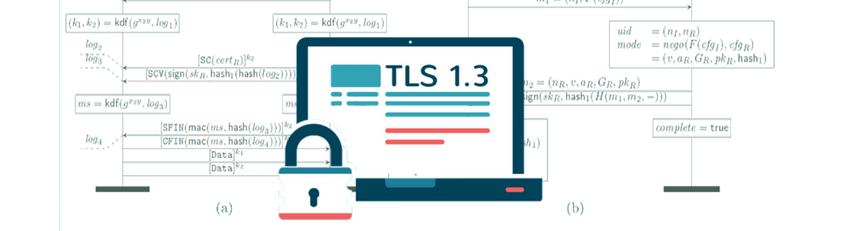 Transport Layer Security (TLS) 1.3 is the latest Transport Layer Security (TLS) protocol, published in August 2018 as an IETF standard in RFC 8446. It facilitates secure communication between web browsers and servers. Also, this protocol provides privacy and performance enhancements compared to the older versions of TLS.
Web browsers use SSL certificates to encrypt the communication over the internet and also allows them to recognize a website by the certificate-issuing authority digitally. However, encryption has few flaws regarding security and speed. Often the harder the encryption, the slower the speeds.
It took a decade to release TLS 1.3 (RFC 8446) after TLS 1.2 involving 28 drafts to define finally. TLS v1.3 has made significant advancements over its predecessors in terms of performance, hardening the encryption security.
Enhanced Performance
Website performance or speed is a significant factor in end-user experience. It isn’t very likely a user will stick to a website if it loads very slowly. With SSL encryption overhead, the speed of the website can suffer more. HTTP/2 protocol solved this, but TLS 1.3 helps speed up encrypted connections even more through its features like TLS false start and Zero Round Trip Time.
The All-New Handshake Process of TLS 1.3
The term “handshake” refers to the client and the server’s process of communicating with each other. The previous versions of TLS had a long handshake process with many round trips.
With TLS 1.2, two round-trips were required to complete the TLS handshake. However, the latest version decreases the process to only one round-trip. The encrypted transmission starts after a single round trip.
Transport Layer Security (TLS) 1.3 is the latest Transport Layer Security (TLS) protocol, published in August 2018 as an IETF standard in RFC 8446. It facilitates secure communication between web browsers and servers. Also, this protocol provides privacy and performance enhancements compared to the older versions of TLS.
Web browsers use SSL certificates to encrypt the communication over the internet and also allows them to recognize a website by the certificate-issuing authority digitally. However, encryption has few flaws regarding security and speed. Often the harder the encryption, the slower the speeds.
It took a decade to release TLS 1.3 (RFC 8446) after TLS 1.2 involving 28 drafts to define finally. TLS v1.3 has made significant advancements over its predecessors in terms of performance, hardening the encryption security.
Enhanced Performance
Website performance or speed is a significant factor in end-user experience. It isn’t very likely a user will stick to a website if it loads very slowly. With SSL encryption overhead, the speed of the website can suffer more. HTTP/2 protocol solved this, but TLS 1.3 helps speed up encrypted connections even more through its features like TLS false start and Zero Round Trip Time.
The All-New Handshake Process of TLS 1.3
The term “handshake” refers to the client and the server’s process of communicating with each other. The previous versions of TLS had a long handshake process with many round trips.
With TLS 1.2, two round-trips were required to complete the TLS handshake. However, the latest version decreases the process to only one round-trip. The encrypted transmission starts after a single round trip.
 Security enhancement With TLS 1.3
Former versions of SSL/TLS had numerous legacy code parts, which brought in many vulnerabilities. In TLS 1.3, all legacy codes were removed simply eliminating the vulnerabilities that come with them. As a result, TLS 1.3 is not backwards compatible unlike most previous versions of TLS.
TLS 1.3 now pulls out obsolete and insecure features from TLS 1.2, including:
Security enhancement With TLS 1.3
Former versions of SSL/TLS had numerous legacy code parts, which brought in many vulnerabilities. In TLS 1.3, all legacy codes were removed simply eliminating the vulnerabilities that come with them. As a result, TLS 1.3 is not backwards compatible unlike most previous versions of TLS.
TLS 1.3 now pulls out obsolete and insecure features from TLS 1.2, including:
- SHA-1
- RC4
- DES
- 3DES
- AES-CBC
- MD5
- Arbitrary Diffie-Hellman groups — CVE-2016-0701
- EXPORT-strength ciphers – Responsible for FREAK and LogJam
- Firefox: Firefox supports TLS 1.3 from version 53 onwards.
- Google Chrome: Chrome supports TLS 1.3 since January 25, 2017. All the latest versions of Chrome support TLS 1.3
- Safar: Safari browser version 5 to 12.1 supports SECURITY TLS 1.3.
- Microsoft Edge: tarted supporting TLS 1.3 with version 76
- Opera: Opera browser version 12.1 to 42 are not compatible. However, Opera version 43 onwards supports SECURITY TLS 1.3.
 Our experienced Support Team can also check the TLS 1.3 support on your server and assist you with enabling TLS 1.3 support.

