

PCI DSS (Payment Card Industry Data Security Standards) are the official security standards created by the PCI Security Standard Council to reduce payment card frauds. It provides elaborate and comprehensive standards to enhance payment card data security. The core purpose of PCI DSS this is to create as secure of an environment as possible for users to process their credit cards. To adhere by PCI DSS, service providers and merchants who sell products over the web are required to have a periodic PCI Security Scans that are usually defined by the credit card companies. PCI Security Scans are initiated over the Internet by an Approved Scanning Vendor (ASV). These scans pinpoint the vulnerabilities and misconfiguration of websites, servers, applications and …
Disabling direct root login over SSH is an important security practice for any cPanel server. Allowing remote root access increases the risk of brute-force attacks and unauthorized logins. By disabling root login, administrators must first log in using a normal user account and then switch to root privileges securely. This approach also allows administrators to access WHM/cPanel without the root password, improving security while maintaining full administrative control over the server. This guide explains how to disable root SSH login on a cPanel server safely without locking yourself out. Why Disable Root SSH Login? The root user has complete control over the server. If attackers gain root access, the entire system can be compromised. Security benefits include: Important Step Before …
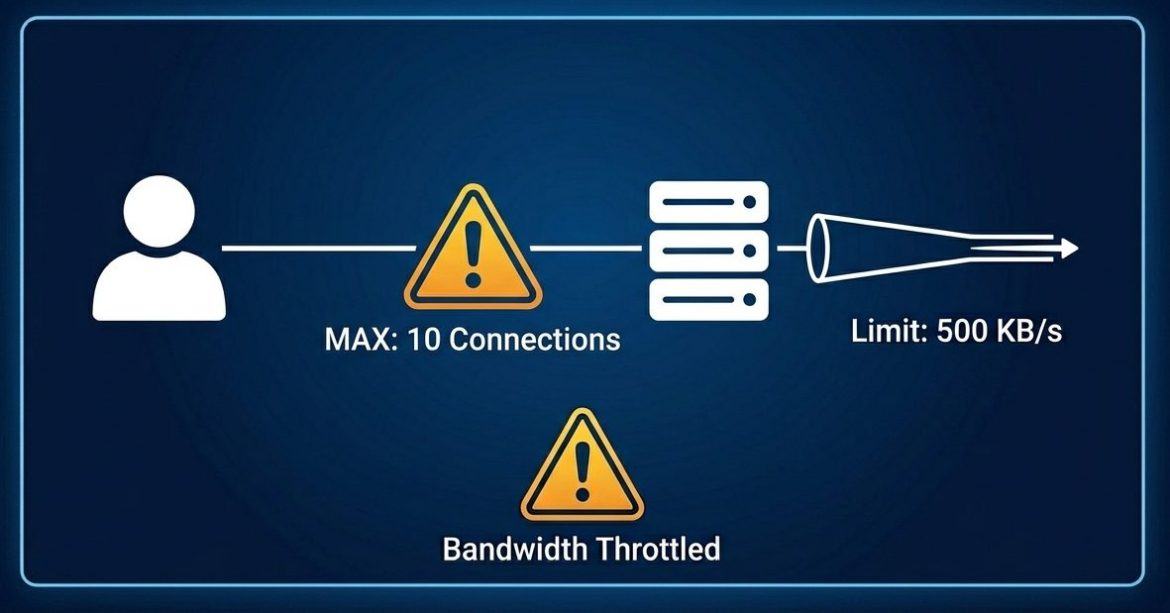
Managing server resources efficiently is essential for maintaining performance and stability. If a particular domain or directory is consuming excessive bandwidth, you can control its usage using the mod_bw module in Apache. The mod_bw (bandwidth module) allows administrators to restrict bandwidth usage and limit the number of simultaneous connections for specific virtual hosts (vhosts) or directories. This is especially useful in shared hosting environments where resource control is critical. When to Use mod_bw You can use mod_bw when: Steps to Install and Configure mod_bw 1. Check Apache Version Run the following command to verify your Apache version: 2. Download the mod_bw Module 3. Extract the Package 4. Review Configuration Instructions 5. Install the Module 6. Create Configuration File 7. Verify …
PHP DSO DSO – Dynamically Shared Objects Apache with PHP can be installed in two different ways. Statically embed the PHP binary into the Apache binary. This is probably the fastest and best way to run PHP Install Apache and PHP is by using Apaches DSO module Why DSO? Apache supports adding modules on instead of embedding them in the httpd binary. This works well when you dont want to re-compile Apache each time a module is updated, or if you want to add on numerous modules for development purposes System Administrators Dream: Allows developers to upgrade PHP without having to recompile Apache
Mod_Security 2.5 Need for a Webserver Security Module It is pretty difficult to secure application softwares. Common targets are Open Source software like PHPNuke. An attacker can easily find out vulnerabilities in the code. If your application is vulnerable to SQL injection, invoking the URL above may very well delete all user data from your application. You can use mod_rewrite to avoid this attack. it is very easy to detect the words drop and table, and then redirect the client away from the original URL. A determined attacker could simply invoke the same URL as above but use the POST method instead of GET. Since POST variables are not considered in the normal processing of most modules, the attack would …
suPHP suPHP is a tool for executing PHP scripts with the permissions of their owners. It consists of an Apache module (mod_suphp) and a setuid root binary (suphp) that is called by the Apache module to change the uid of the process executing the PHP interpreter. Main Features of SuPHP suPHP provides an additional layer of protection on servers. It causes php scripts to run under the account username instead of the user nobody which is the user that apache/php would run under on a server that is not running suPHP. This feature allows us to more easily track any potential security breaches that come in via insecure php script(s) that a user is running. suPHP also does away with …

Secure Shell (SSH) is one of the most critical components of modern server administration. It enables administrators and developers to remotely access servers, execute commands, transfer files, and manage infrastructure securely over an untrusted network. However, if SSH is misconfigured or left unsecured, it can become a major attack vector for brute-force attempts, unauthorized access, and data breaches. In this guide, we’ll explain what SSH is, why securing it is essential, and walk through practical steps to harden SSH access using configuration best practices and SSH key-based authentication. What Is SSH? Secure Shell (SSH) is a cryptographic network protocol used to establish a secure communication channel between two networked devices. It is primarily used on Linux and Unix-based systems …

The Internet Protocol (IP) is a data-oriented protocol that allows multiple hosts to talk to each other across network connections. Data in an IP network are sent in blocks referred to as packets or datagrams. They typically have a source host, destination host, and source and destination ports associated with the communication. Layered on top of the IP protocol are other protocols. These are typically transport layers. There are two main transport protocols that are heavily used. The transmission control protocol (TCP) is a stateful delivery mechanism that makes a best effort to deliver the packets requested. If the first attempt fails, multiple attempts are made to route and deliver the packet. This protocol is very good at delivering text …
Older Posts