
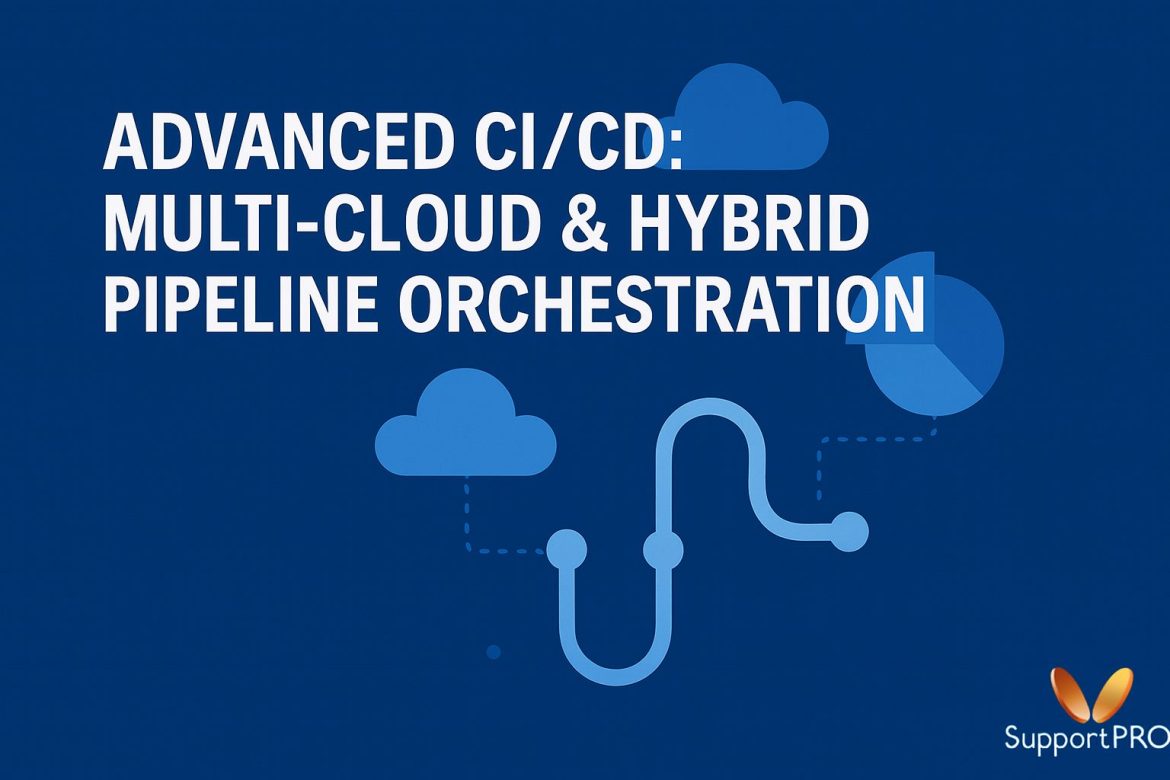
As businesses expand across regions, platforms, and regulatory environments, software delivery becomes more complex. Traditional CI/CD pipelines improve development speed, but they are not designed to manage distributed infrastructure, embedded governance, and enterprise-scale resilience. Advanced CI/CD addresses this gap by combining automation, ci/cd orchestration, policy enforcement, intelligent operations, and orchestrating application delivery in multi-cloud environment into a unified delivery framework. What Is the Difference Between Normal CI/CD and Advanced CI/CD? The difference lies in scope, governance, and operational intelligence : Normal CI/CD focuses on automating builds, tests, and deployments within a defined environment. It improves developer productivity but still relies on manual approvals, environment-specific configurations, and reactive troubleshooting. Advanced CI/CD extends automation into multi-environment orchestration, compliance enforcement, progressive delivery strategies, …
AWS
If you have been using cloud services, you must be familiar with Amazon Web Services, Google Cloud, and Azure, the three most prominent players in the cloud computing industry. Although you can adopt a multi-cloud strategy and work with all three, most entrepreneurs want to stick to a single cloud service provider. Each option we’ve discussed in this post is popular for its exceptional services. We’ll compare them on the basis of services, cloud infrastructure, perks, pricing, and other parameters to help you make an informed decision. Understanding Cloud Computing Cloud computing is the most preferred choice for data management. The reasons for its growing popularity include cost-efficiency, scalability, increased storage capacity, and lesser infrastructure requirements. The concept is simple …
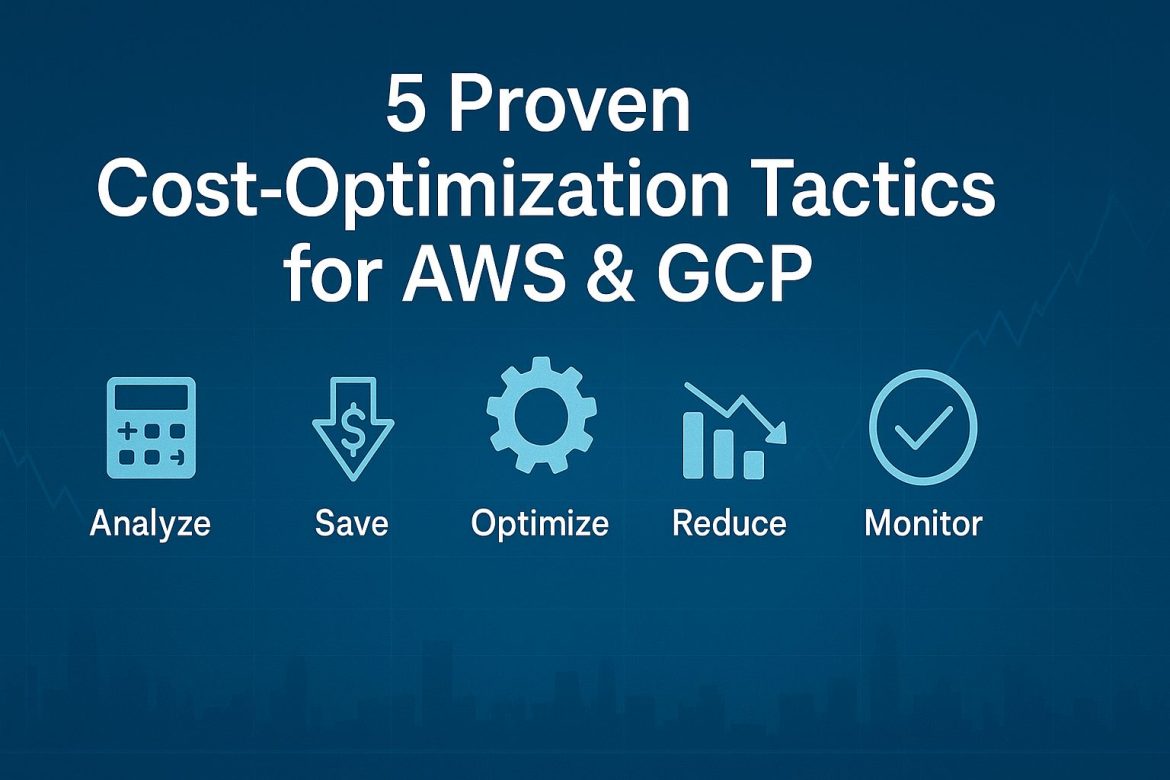
These days, nearly every business relies on AWS or Google Cloud to power its operations. But here’s the problem: the cloud bills keep climbing higher each month, sometimes with no clear explanation. The convenience of spinning up resources with a few clicks comes with a hidden tradeoff of financial sprawl that creeps up until it becomes a budgetary crisis. Why This Happens: Getting Started with Cloud Cost Savings Before cutting down your cloud expenses, you need to understand what you’re actually paying for. Both AWS Management and GCP Support have complex pricing that changes based on: -First steps: Finding and Fixing Waste It’s frustrating to know that a huge amount of money gets wasted on: Make it a habit to: …
FinTech companies don’t just use the cloud they depend on it. From processing payments to managing sensitive customer data, cloud infrastructure supports every critical operation. More than 80% of FinTech companies list scalability and infrastructure reliability as top priorities, and for good reason. Whether it’s a startup offering microloans or a large platform handling millions of transactions, cloud support is not optional. The right cloud setup helps avoid compliance penalties, reduces security risks, and ensures systems scale smoothly during growth. This blog explains how FinTech focused cloud support helps companies stay compliant, secure, and ready to grow. 1. Compliance Made Easier FinTech companies operate under strict regulations such as GDPR, PSD2, and SOC 2. Failing to meet these standards can …
Cloud computing has become the backbone of modern businesses and Amazon Web Services (AWS) is one of the most popular cloud platforms, offering a wide range of services to help organizations scale and innovate. However, as cloud usage grows, so do the costs. Without proper management, your AWS bill can quickly spiral out of control. To avoid that, AWS provides several tools and strategies to help you optimize costs without compromising performance. This blog will explore practical ways to reduce your AWS spending. 1. Right-Sizing Your Resources One of the most common causes of overspending on AWS is over-provisioning resources. Many organizations deploy larger instances or storage than they actually need, leading to unnecessary costs. Tips on how to Optimize: …
As organizations generate larger volumes of data, transferring information to the cloud using traditional internet connections can become time-consuming, expensive, and impractical. Businesses operating in remote locations, managing petabytes of data, or facing bandwidth limitations often require an alternative approach to cloud migration. AWS Snow Family is a collection of secure physical devices and services designed to move massive amounts of data into and out of AWS quickly and efficiently. Beyond data transfer, these devices also support edge computing workloads, allowing organizations to process and analyze data closer to where it is generated. In this guide, we’ll explore the AWS Snow Family, its components, benefits, use cases, and how organizations can leverage these solutions for secure data migration and edge …
In this era of the ever-evolving world of cloud computing, where Amazon Web Services (AWS) has introduced several groundbreaking technologies. One of the most talked-about innovations in recent years is the AWS Graviton Processor. But what exactly is it, and does it live up to the hype? In this blog, we will break down AWS Graviton processors, how they work, whether they are game-changing advancements or if their excitement is overblown. What is AWS Graviton? AWS Graviton is a family of processors built by Amazon Web Services specifically for cloud computing. Most processors, such as those from Intel and AMD, use the traditional x86 architecture. In contrast, AWS Graviton processors are based on Arm architecture, which is known for being …
Troubleshooting AWS Elastic Load Balancer (ELB) Issues and Optimization Tips
In today’s fast-paced digital landscape, applications must remain highly available, scalable, and responsive. Businesses running workloads in the cloud rely on load balancing solutions to distribute traffic efficiently and prevent downtime. One of the most widely used solutions is Amazon Elastic Load Balancer, a service provided by Amazon Web Services. It automatically distributes incoming traffic across multiple compute resources such as Amazon EC2 instances, containers, and serverless functions. However, configuration mistakes or health check failures can sometimes lead to application downtime or performance issues. Understanding how to troubleshoot these problems and optimize your load balancer is essential for maintaining a reliable cloud infrastructure. What is AWS Elastic Load Balancer? Amazon Elastic Load Balancer (ELB) is a managed service that automatically …
Choosing the Right AWS Managed Service Provider: Key Consideration Factors
Considering scaling your business operations to AWS Cloud? If yes, picking the right Managed Service Provider (MSP) is crucial to ensure a smooth and effective transition. With so many MSPs available in the market, it might be overwhelming to determine which one will suit their organization’s needs. This article will highlight the key considerations when selecting an Amazon Web Services (AWS) Managed Service Provider. We will cover all the essential areas you need to consider, from assessing their expertise and experience to evaluating their support and pricing models. We want you to be equipped with information to help you select an MSP according to your business objectives and aspirations. This article guides decision-making, whether you seek comprehensive support or a …
Understanding AWS Support Services is essential for getting the most value from your cloud environment, whether you’re just starting out or already managing complex workloads. With multiple support tiers available, choosing the right one can significantly impact performance, cost efficiency, and operational stability. In this guide, we’ll break down the different AWS support plans – Basic, Developer, Business, and Enterprise; and explain how each level works, what it offers, and who it’s best suited for. By the end, you’ll have a clear understanding of their features, limitations, and benefits, helping you select the support option that best fits your organization’s needs. Beyond explaining the support levels, we will also delve into the numerous benefits of AWS Support Services. These include …