

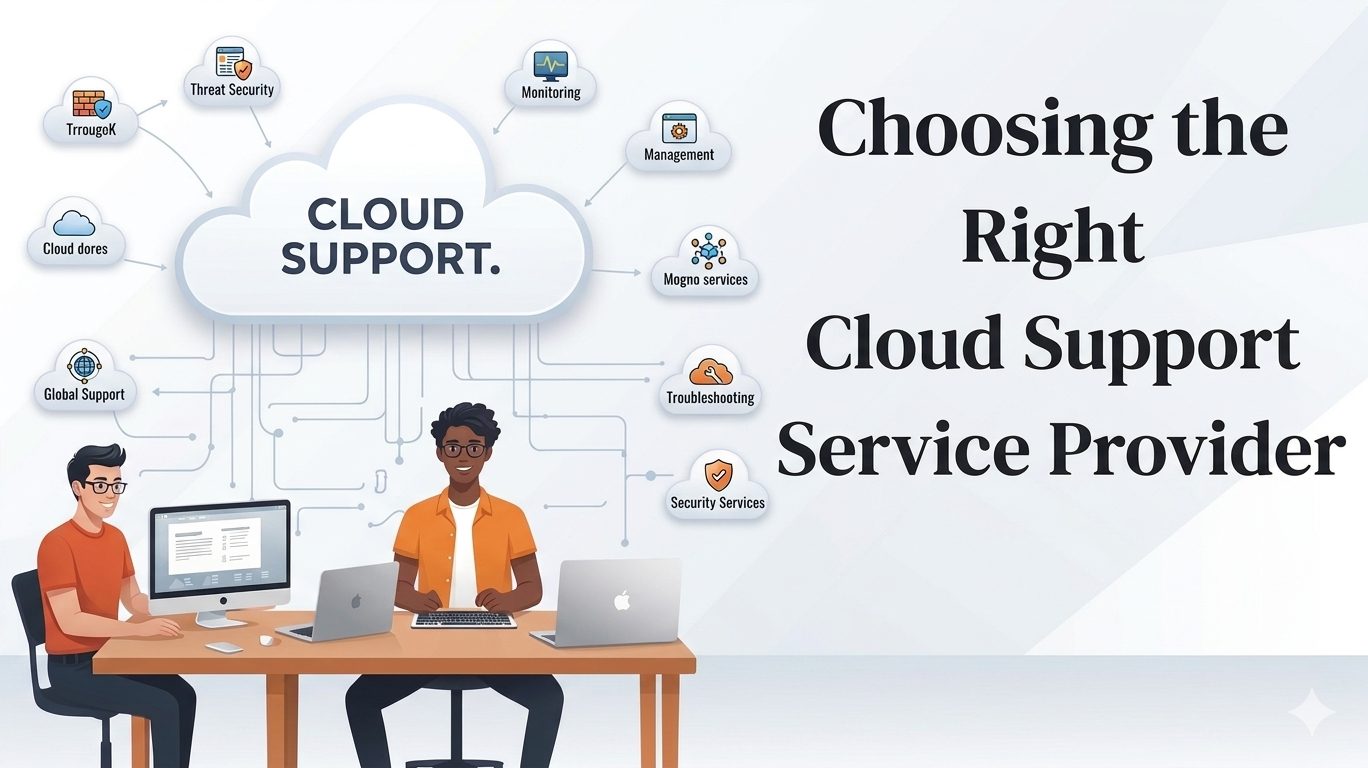
In today’s fast-paced digital landscape, businesses increasingly rely on cloud technology to manage operations, improve efficiency, and stay competitive. As organizations continue adopting cloud computing solutions, the need for reliable cloud support services has become essential. Cloud support services encompass a wide range of technical solutions provided by cloud managed service providers (MSPs) to help businesses deploy, manage, optimize, and secure their cloud environments effectively.
These services enable organizations to maximize their cloud investments while ensuring performance, security, and scalability. In an era driven by remote work, digital transformation, and rapidly evolving technologies, having the right cloud support partner plays a critical role in maintaining operational continuity and business agility. Choosing the right cloud support service provider not only keeps systems running smoothly but also empowers businesses to innovate, scale confidently, and respond quickly to changing market demands.
2. What Are Cloud Support Services?
Cloud support services refer to a range of technical solutions that help businesses deploy, manage, monitor, and optimize their cloud infrastructure and applications. Delivered by specialized cloud service providers or managed service providers (MSPs), these services ensure that cloud environments operate securely, efficiently, and without disruption.
A cloud support service provider assists organizations throughout the entire cloud lifecycle – from initial setup and configuration to ongoing maintenance, performance optimization, troubleshooting, and security management. Businesses that rely on cloud platforms for data storage, application hosting, or infrastructure management depend on cloud support teams to maintain system reliability and operational continuity.
Rather than managing complex cloud environments internally, organizations can rely on expert support to handle tasks such as:
- Cloud environment setup and configuration
- Performance monitoring and optimization
- Security management and compliance support
- Issue diagnosis and technical troubleshooting
- Resource optimization and cost control
By leveraging cloud support services, businesses gain access to specialized expertise and proactive management practices that help prevent downtime, enhance system performance, and ensure cost-efficient use of cloud resources.
In essence, cloud support services allow organizations to focus on their core business operations while experienced professionals manage the technical complexities of the cloud infrastructure behind the scenes.
3. Types of Cloud Support Services
Cloud support services can be broadly categorized into two types: managed support and unmanaged support.
Managed Support vs. Unmanaged Support
- Managed Support: This includes comprehensive services where the provider takes full responsibility for managing and maintaining the cloud environment. This support can include monitoring, backup, disaster recovery, and optimization services.
- Unmanaged Support: In this model, the organization retains control over its cloud environment and relies on the provider for assistance as needed. This approach is suitable for businesses with in-house IT expertise but may lack the benefits of comprehensive support.
| Feature | Managed Support | Unmanaged Support |
| Monitoring | 24/7 included | On-demand only |
| Maintenance | Provider handles | Internal team |
| Security | Proactive | Reactive |
| Expertise Required | Minimal internal IT | Skilled in-house team |
Managed services are ideal for businesses that want predictable costs and expert oversight.
4. Role of Cloud Managed Service Providers (MSPs)
Cloud Managed Service Providers (MSPs) play a central role in delivering effective cloud support services. As organizations increasingly rely on cloud infrastructure to run critical business operations, MSPs provide the expertise, tools, and ongoing management required to maintain performance, security, and reliability.
Who Are Cloud Managed Service Providers?
Cloud MSPs are specialized third-party organizations responsible for managing and supporting a company’s cloud environment. They oversee cloud infrastructure, applications, and related services on behalf of businesses, allowing internal teams to focus on strategic initiatives rather than day-to-day technical maintenance.
By leveraging industry best practices and advanced management tools, MSPs help organizations optimize cloud resources, control operational costs, and ensure systems remain secure and highly available.
Key Services Provided by Cloud MSPs
Cloud managed service providers deliver a comprehensive range of services designed to support business continuity and operational efficiency:
- 24/7 Monitoring and Performance Management
Continuous monitoring of cloud environments helps detect performance issues, security risks, or system anomalies early, minimizing downtime and ensuring optimal operation. - Data Backup and Protection
MSPs implement automated and regular backup strategies to safeguard critical business data and prevent loss caused by system failures, cyber incidents, or human error. - Disaster Recovery and Business Continuity
Providers design and manage disaster recovery plans that enable rapid restoration of applications and data during unexpected disruptions, ensuring minimal impact on business operations. - Cloud Optimization and Resource Management
MSPs analyze resource usage to improve performance while reducing unnecessary cloud expenses. - Security Management and Compliance Support
They implement security controls, access management policies, and compliance frameworks to protect sensitive data and meet industry regulations.
By partnering with a cloud managed service provider, businesses gain access to specialized expertise, proactive system management, and scalable support – ensuring their cloud environment remains resilient, secure, and aligned with evolving business needs.
5. Key Benefits of Cloud Support Services for Businesses
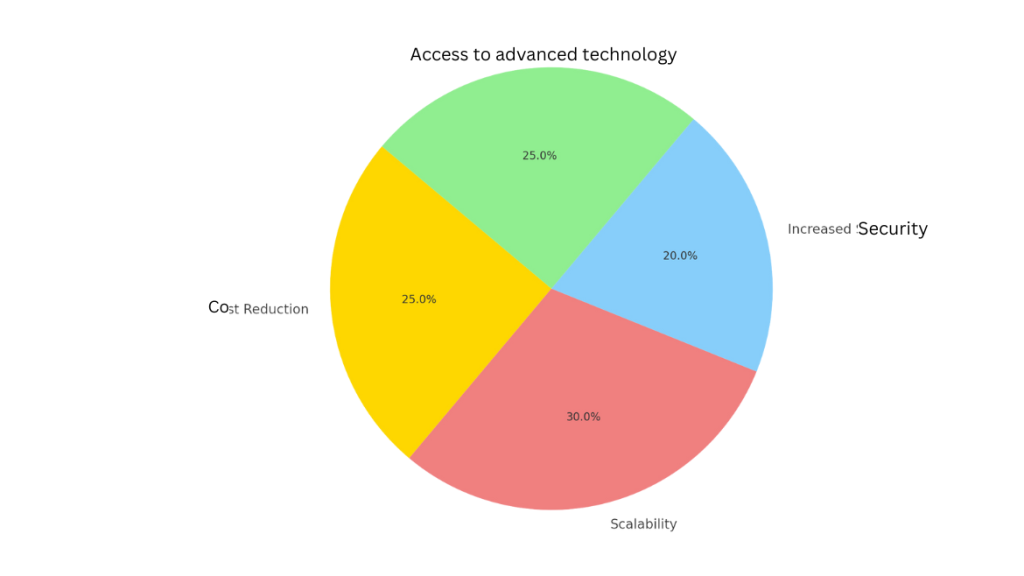
Cloud support services provide organizations with the expertise and operational support needed to fully leverage cloud technology. By outsourcing cloud management to experienced providers, businesses can improve efficiency, strengthen security, and scale operations without the limitations of traditional IT infrastructure.
-> Cost Optimization
Cloud support services reduce capital expenditure by eliminating the need for costly on-premise hardware, infrastructure maintenance, and dedicated IT resources. Providers continuously monitor resource usage and recommend optimizations, helping businesses avoid overprovisioning and unnecessary expenses.
-> Scalability and Flexibility
Cloud environments allow organizations to scale resources up or down based on business demands. With professional cloud support, companies can quickly adjust computing power, storage, or applications without major investments or operational disruptions.
-> Enhanced Security and Risk Management
Cloud service providers implement advanced security frameworks designed to protect sensitive business data. These measures typically include data encryption, identity and access management, threat monitoring, vulnerability assessments, and regular security audits ensuring strong protection against evolving cyber threats.
-> Access to Advanced Technologies
Cloud support services give businesses access to modern technologies such as artificial intelligence (AI), machine learning, automation tools, and advanced analytics platforms. Organizations can adopt innovation faster without investing heavily in infrastructure development or specialized expertise.
-> Improved Operational Efficiency
With proactive monitoring, automated maintenance, and expert troubleshooting, cloud support teams minimize downtime and maintain consistent system performance. This allows internal teams to focus on strategic business initiatives rather than routine IT management.
6. Cost-Effectiveness of Cloud Support Services
One of the strongest drivers behind cloud adoption is its cost efficiency compared to traditional on-premise IT environments. Cloud support services shift IT spending from large upfront capital investments to predictable operational expenses, enabling better financial planning and resource allocation.
On-Premise vs. Cloud Support Cost Comparison
| Cost Category | On-Premise Infrastructure | Cloud Support Services |
| Initial Setup | High investment in hardware and software | Low, subscription-based model |
| Maintenance | Continuous staffing, repairs, and upgrades | Included within service plans |
| System Upgrades | Manual and expensive | Automatic updates and optimization |
| Scalability | Limited by physical infrastructure | Instantly adjustable resources |
Why Cloud Support Reduces Costs ?
- Eliminates hardware procurement and maintenance expenses
- Reduces reliance on large in-house IT teams
- Prevents costly downtime through proactive monitoring
- Enables pay-as-you-use resource management
- Improves long-term IT budgeting predictability
By combining operational expertise with flexible pricing models, cloud support services help organizations achieve greater efficiency while maintaining high-performance and secure IT environments.
7. Security, Compliance, and Data Protection in Cloud Support Services
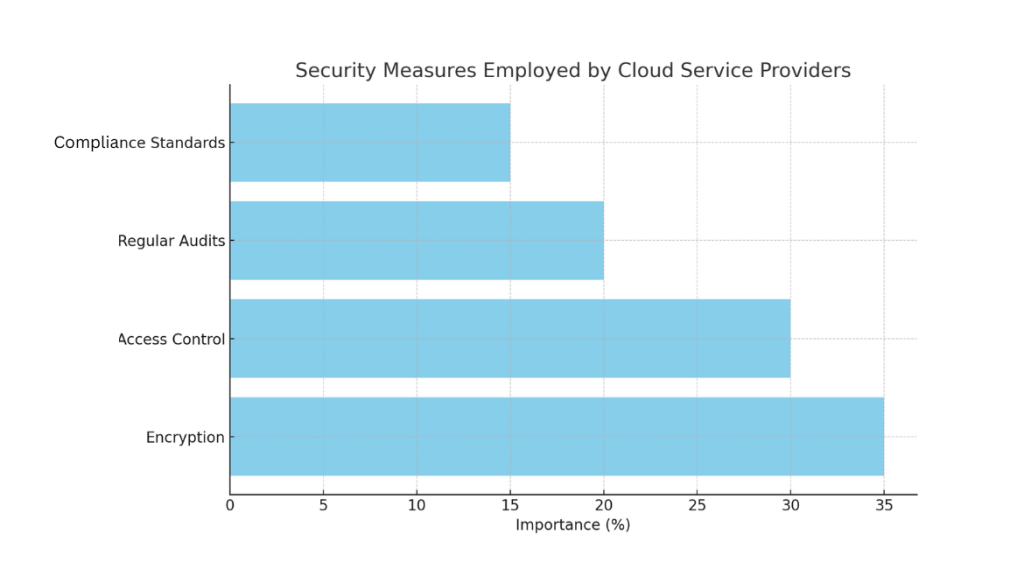
Security and regulatory compliance are critical considerations for organizations operating in cloud environments. Cloud support services play a vital role in safeguarding business data, maintaining system integrity, and ensuring adherence to industry and regional compliance standards.
– Comprehensive Data Protection
Cloud support providers implement multiple layers of security designed to protect sensitive information from unauthorized access, cyber threats, and data loss. These measures typically include:
- Data Encryption – Encryption safeguards data both in transit and at rest, ensuring information remains protected during transmission and storage.
- Access Control Management – Role-based access and identity verification prevent unauthorized system access.
- Continuous Security Monitoring – Proactive monitoring detects vulnerabilities, suspicious activity, and potential threats before they impact operations.
- Regular Security Audits – Ongoing assessments help maintain strong security posture and reduce risk exposure.
– Regulatory Compliance and Governance
Modern cloud support services also assist organizations in meeting regulatory and industry compliance requirements. Providers help align cloud environments with recognized standards such as:
- GDPR for data privacy and protection
- HIPAA for healthcare data security
- Industry-specific compliance and governance frameworks
By ensuring compliance readiness, cloud support providers reduce legal risks, support data privacy obligations, and help businesses maintain customer trust.
Through integrated security practices and compliance management, cloud support services enable organizations to operate confidently in the cloud while protecting critical assets and meeting evolving regulatory demands.
8. Cloud Migration Support
Transitioning to the cloud can be challenging. Cloud support services offer migration support to help businesses seamlessly move their data and applications.
– Transitioning from Traditional Infrastructure to the Cloud
- Assessment: Evaluating current infrastructure to determine the best cloud strategy.
- Planning: Developing a migration plan that minimizes disruption.
- Execution: Carrying out the migration process while ensuring data integrity.
– Migration Strategies
Based on the business’s needs, different migration strategies, such as lift-and-shift, re-platforming, or refactoring, can be employed.
9. Proactive Monitoring, Maintenance, and Disaster Recovery
Proactive monitoring and maintenance are fundamental components of cloud support services, helping businesses maintain system stability, prevent disruptions, and ensure continuous operations. Rather than reacting to problems after they occur, cloud support providers focus on identifying risks early and resolving potential issues before they affect performance or availability.
-> 24/7 Monitoring and Preventive Maintenance
Continuous monitoring enables cloud support teams to track system health, performance metrics, and security activity in real time. This proactive approach allows providers to quickly detect anomalies, performance bottlenecks, or security vulnerabilities, minimizing downtime and maintaining optimal system performance.
Key capabilities include:
- Real-time infrastructure and application monitoring
- Automated alerts for unusual activity or failures
- Regular system updates, patching, and optimization
- Performance tuning to maintain efficiency
-> Predictive Analytics and Proactive Issue Resolution
Advanced analytics tools analyze historical system data to identify patterns and predict potential failures. By addressing issues before they escalate, businesses can avoid costly outages, improve reliability, and maintain consistent user experiences.
-> Disaster Recovery and Business Continuity
Despite preventive measures, unexpected incidents such as cyberattacks, hardware failures, or natural disasters can occur. Cloud support services include comprehensive disaster recovery and business continuity planning to ensure rapid recovery and minimal operational disruption.
Backup Strategies
Cloud providers implement automated and secure backup solutions that regularly store critical business data across redundant environments, protecting against accidental deletion, system failures, or data corruption.
Recovery Planning and Execution
Tailored disaster recovery plans define clear procedures for restoring applications, systems, and data. These structured recovery processes enable organizations to resume operations quickly, reducing downtime and safeguarding business continuity during crises.
By combining proactive monitoring with robust disaster recovery strategies, cloud support services help organizations build resilient cloud environments capable of sustaining operations even under unexpected challenges.
10. Supporting Multi-Cloud and Hybrid Cloud Environments
Many businesses are increasingly embracing multi-cloud and hybrid cloud strategies to enhance their operations. Cloud support services play a critical role in managing these environments.
Multi-Cloud Strategy
Using multiple cloud providers can enhance flexibility and prevent vendor lock-in. Cloud support services ensure seamless integration between different cloud platforms.
Benefits of Hybrid Cloud Environments
Hybrid cloud environments combine on-premise and cloud resources, allowing businesses to control sensitive data while leveraging the cloud for scalability and cost savings.
11. How to Choose the Right Cloud Support Service Provider
Selecting the right cloud support service provider is one of the most important decisions businesses make when moving to or scaling in the cloud. The right partner not only maintains your infrastructure but also improves performance, strengthens security, and supports long-term business growth.
A reliable cloud support provider acts as a strategic technology partner ensuring your systems remain secure, optimized, and available whenever your business needs them.
Why Choosing the Right Provider Matters

A strong cloud support partner directly impacts operational success through:
- Reliability and Uptime
Consistent monitoring and rapid issue resolution minimize downtime and ensure business-critical applications remain accessible. - Security Protection
Advanced security frameworks safeguard data, applications, and infrastructure against cyber threats and unauthorized access. - Scalability for Growth
As business demands evolve, the right provider enables seamless scaling of cloud resources without costly infrastructure changes. - Cost Optimization
Expert resource management prevents overspending by aligning cloud usage with actual business requirements. - Technical Expertise
Experienced cloud specialists provide strategic guidance, best practices, and ongoing optimization tailored to your organization.
Key Factors to Evaluate When Selecting a Cloud Support Provider
1. Experience and Technical Expertise
Choose a provider with proven experience managing multiple cloud platforms and complex environments. Industry knowledge ensures faster problem resolution and better architectural decisions.
2. Service Level Agreements (SLAs)
Clearly defined SLAs establish expectations for uptime guarantees, response times, and issue resolution. Strong SLAs demonstrate accountability and service reliability.
3. Security and Compliance Capabilities
Verify that the provider follows industry-standard security practices, including encryption, access controls, threat monitoring, and regulatory compliance support relevant to your business sector.
4. 24/7 Support Availability
Cloud environments operate continuously. A provider offering round-the-clock monitoring and support ensures immediate assistance whenever issues arise.
5. Customization and Flexibility
Every organization has unique operational needs. Look for providers that deliver tailored solutions rather than one-size-fits-all service packages.
6. Scalability and Future Readiness
Your cloud partner should enable effortless expansion, allowing you to add resources, applications, or services as your business grows.
7. Transparent Pricing Structure
Evaluate pricing models carefully. The best providers offer clear, predictable costs with optimization recommendations that maximize return on investment.
8. Customer Reputation and Client Success
Customer reviews, testimonials, and case studies provide valuable insight into service quality, responsiveness, and long-term client satisfaction.
Pro Tip: Think Beyond Support – Choose a Cloud Partner
The ideal cloud support provider does more than fix problems. They proactively improve performance, reduce risks, control costs, and help your organization innovate faster in the cloud.
Choosing the right partner ensures your cloud infrastructure becomes a growth enabler rather than a technical challenge.
12. Choosing the Right Cloud Support Service Provider
Selecting the right cloud support service provider is crucial for maximizing benefits. Here are some key considerations:
Key Considerations (Reputation, Experience, Services)
- Reputation: Research the provider’s reputation and customer reviews.
- Experience: Look for providers with a proven track record in your industry.
- Services Offered: Ensure the provider offers a comprehensive service suite that aligns with your needs.
Questions to Ask Providers
- What security measures do you have in place?
- How do you handle data recovery and backups?
- Can you provide case studies or references?
13. Cloud Support for SMBs vs. Large Enterprises
Cloud support services can be tailored to meet the unique needs of different business sizes.
Scaled Solutions for Different Business Sizes
- Small and Medium-sized Businesses (SMBs): Require cost-effective and scalable solutions.
- Large Enterprises: Need comprehensive support for complex cloud environments.
Tailored Services for Small vs. Large Organizations
Providers should offer flexible solutions catering to the specific requirements of SMBs and large enterprises.
14. Future Trends in Cloud Support Services
As technology evolves, so do cloud support services. Here are some future trends to watch:
– AI Integration
Artificial intelligence will significantly automate cloud management processes, enhance efficiency, and improve decision-making.
– Edge Computing
The rise of edge computing will enable faster data processing by bringing computation closer to the data source, further enhancing cloud capabilities.
– Enhanced Security Measures
With increasing cyber threats, cloud providers will continue to innovate their security measures to protect sensitive data.
15. Frequently Asked Questions About Cloud Support Services
What are cloud support services?
Cloud support services include monitoring, security management, backup, optimization, and technical assistance for cloud infrastructure and applications.
What does managed cloud support include?
Managed cloud support typically includes 24/7 monitoring, performance optimization, patch management, backup, disaster recovery, and security compliance support.
How much do cloud support services cost?
Costs vary based on infrastructure size, number of servers, and support level. Most providers offer monthly subscription or tier-based pricing models.
Is cloud support necessary for small businesses?
Yes. Small businesses benefit from cloud support through reduced downtime, improved security, and access to expert technical assistance without hiring full-time IT staff.
What is the difference between cloud support and traditional IT support?
Traditional IT support focuses on on-premise systems, while cloud support manages infrastructure, applications, and security within cloud environments.
16. Conclusion
Cloud support services have become a strategic necessity for businesses navigating today’s increasingly digital and cloud-driven environment. From improving operational efficiency and strengthening security to optimizing costs and enabling scalability, the right cloud support approach empowers organizations to fully realize the value of their cloud investments.
Choosing the right cloud support service provider is a decision that directly influences business performance, resilience, and long-term growth. More than just technical assistance, effective cloud support represents a partnership – one that ensures your infrastructure remains secure, optimized, and ready to adapt to evolving business demands and technological advancements.
As cloud technologies continue to evolve, organizations that invest in expert cloud support will be better positioned to innovate, remain competitive, and confidently face future challenges.
SupportPRO delivers specialized cloud support services designed to help businesses manage and optimize their cloud environments with confidence. With expert guidance, proactive monitoring, and tailored solutions, companies can focus on their core operations while ensuring their cloud infrastructure stays secure, efficient, and future-ready.
Ready to strengthen your cloud strategy?
Connect with our team to discover how SupportPRO can help you optimize, secure, and scale your cloud operations for sustained business success.
Facing issues?
Our technical support
engineers can solve it.


