

Greylisting Greylisting is a simple way of blocking emails. in Grey listing, what it checks is that if the mail is legitimate or not. If there is a prior relationship between the sender and the receiver, the message get delivered without any issue. If the sender is suspicious and unknown the message gets temporarily rejected with 451 error message.

In today’s web hosting environment, databases play a critical role in powering websites and applications. Many modern platforms depend heavily on databases such as MySQL to store and retrieve large amounts of data. However, when websites receive heavy traffic, database queries can increase significantly, which may slow down performance. To handle high traffic and reduce downtime, many large websites use database clustering and caching solutions. One of the most popular tools used for this purpose is Memcached, a distributed memory caching system designed to improve the speed and scalability of dynamic web applications. Memcached was originally developed by Brad Fitzpatrick to help manage database load more efficiently. Today, it is widely used by high-traffic websites to reduce database queries and …
If you manage multiple Linux servers, logging in with a password every time can be slow and insecure. A better method is to configure SSH key-based authentication. This allows secure login without entering a password each time. In this guide, we will configure SSH access between two servers: Step 1: Login to Server1 as Root First, log in to Server1 using SSH. Step 2: Generate an SSH Key Pair on Server1 Instead of using DSA (which is outdated), it is recommended to use RSA or ED25519 for better security. Run the following command on Server1: You will see: Press Enter to accept the default location. You may: After completion, you will see: Your identification has been saved in /root/.ssh/id_rsa Your …
You can update your WP easily by the following steps : 1. Backup your database. 2. Backup ALL your WordPress files in your WordPress directory. Don’t forget your .htaccess file. 3. Verify the backups you created are there and usable. 4. Deactivate ALL your Plugins. 5. Ensure first four steps are completed. 6. Download and extract the WordPress package fromhttp://wordpress.org/download/. 7. Delete the old WordPress files on your site, but DO NOT DELETE the following files * wp-config.php file; * wp-content folder; Special Exception: the wp-content/cache and the wp-content/plugins/widgets folders should be deleted. * wp-images folder; * wp-includes/languages/ folder–if you are using a language file do not delete that folder; * .htaccess file–if you have added custom rules to your …
Plesk root directory : /usr/local/psa Plesk version : /usr/local/psa/version Plesk Admin pass : /etc/psa/.psa.shadow Plesk conf file : /etc/psa/psa.conf Apache conf : /etc/httpd/conf/httpd.conf Plesk apache startup script : /usr/local/psa/admin/bin/httpsdctl start Apachelog files : /var/log/http/ Php conf : /etc/php.ini Named conf : /var/named/run-root/etc/named.conf Named db : /var/named/run-root/var/domainname Log : /var/log/messages Names restart : /etc/init.d/named restart Mysql Db location : /var/lib/mysql Mysql conf : /etc/my.cnf Mysql log : /var/log/mysql.log Plesk qmail : /var/qmail Mail Dir for domain: /var/qmail/mailnames/domainname Maillog : /var/log/maillog Plesk home dir : /var/www/vhosts/domain.com Plesk Doc root : /var/www/vhost/domainname/httpdocs Subdomain Docroot: /var/www/vhost/domainname/subdomain Domain specific log: /var/www/vhosts/domainname/statistics/logs If you require help, contact SupportPRO Server Admin
Accidentally deleting a file in Linux does not always mean the data is permanently lost. Thanks to how the Linux filesystem works, it is often possible to recover a deleted file — provided a running process still has it open. This guide explains how Linux handles file deletion and how you can recover deleted files using the /proc filesystem and the lsof command. Understanding How Linux Deletes Files In Linux, a file is essentially a link to an inode. An inode stores important metadata such as: When you delete a file using the rm command, Linux removes only the directory entry (link) pointing to the inode. The actual data is not immediately deleted. The data remains on disk as long …
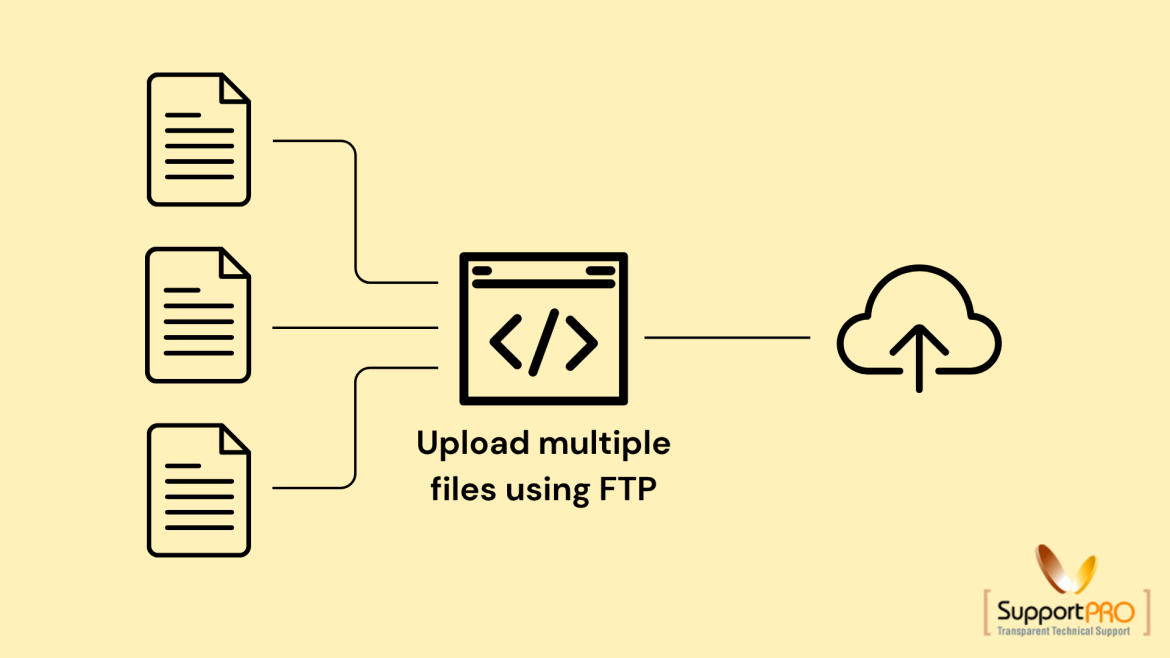
Uploading files through FTP is a common task for system administrators and developers. When handling multiple files or entire directories, using command line FTP tools can save time and simplify file transfers. One of the most efficient ways to upload multiple files using FTP is with the lftp command-line utility. It supports advanced file transfer features such as directory mirroring, recursive uploads, and automated synchronization. In this guide, we will explain how to upload multiple files using FTP in command line mode with lftp. What is lftp? lftp is a powerful command-line FTP client available on Linux and Unix-based systems. It supports: The tool is widely used for transferring large numbers of files and managing remote servers efficiently. Advantages of …

Linux system administrators rely heavily on command-line monitoring tools to keep servers healthy, diagnose performance bottlenecks, and respond quickly to issues. These tools provide real-time insights into system resources such as CPU, memory, disk I/O, and network usage, helping admins make informed decisions without relying on graphical interfaces. Below are some of the most widely used and practical command-line tools every Linux administrator should be familiar with. Top The top command is one of the most commonly used monitoring tools on Linux systems. It provides a dynamic, real-time view of the system’s overall performance, including CPU usage, memory consumption, load averages, and a list of running processes. Administrators can interact with the interface to sort processes, kill tasks, or change …
Please make a copy of configuration files before editing the same. Steps: Go to the following file and add the domain name. /var/cpanel/maxemails Eg:example.com = 1000 Just add an entry like example.com = 1000 . Now 1000 will be the maximum email per hour limit for domain. Execute the following script after updating the file /var/cpanel/maxemails, this will update the email settings in cpanel database. #/scripts/build_maxemails_config If you require help, contact SupportPRO Server Admin
We can easily retrieve all the FTP usernames and password under a domain in plain text, by following the below steps. 1. Enter the MySQL Prompt. # mysql -u admin -p`cat /etc/psa/.psa.shadow` 2. use psa; 3. mysql> select US.* FROM sys_users US, hosting HS, domains DM -> WHERE US.id = HS.sys_user_id AND HS.dom_id = DM.id AND DM.name =’domain.com’; The below given is a sample output of that command. +—–+———-+———-+———————————–+————+——-+ | id | login | passwd | home | shell | quota | +—–+———-+———-+———————————–+————+——-+ | 110 | ftpuser | password | /home/httpd/vhosts/domain.com | /bin/false | 0 | +—–+———-+———-+———————————–+————+——-+ If you require help, contact SupportPRO Server Admin