

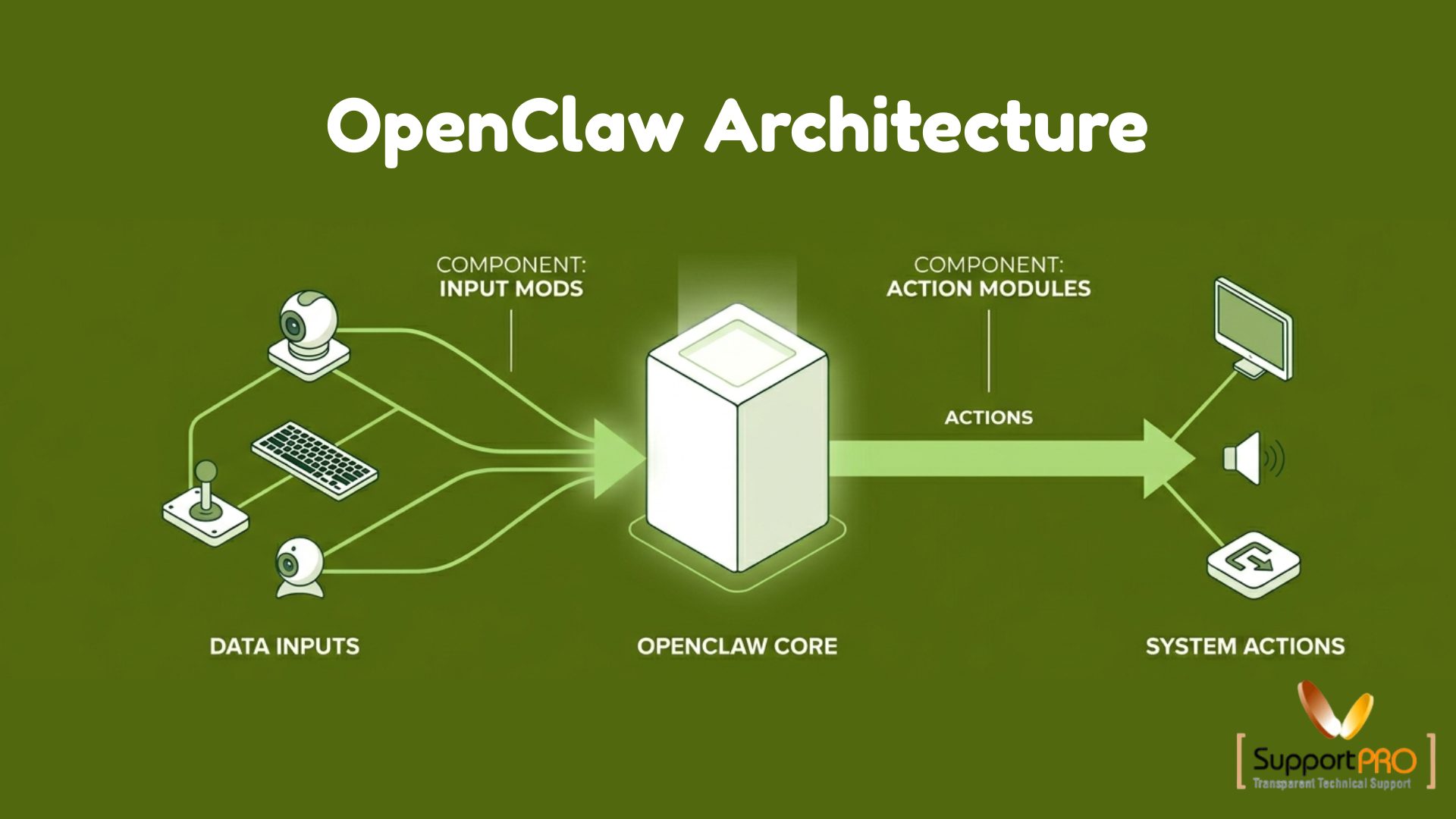
Modern software platforms rely on carefully designed architectures to ensure performance, scalability, and reliability. Understanding how a system operates internally helps developers, system administrators, and IT professionals troubleshoot issues, optimize performance, and extend functionality more effectively.
OpenClaw is built on a modular architecture that separates responsibilities into distinct layers. This design enables efficient processing, easier maintenance, and improved scalability while allowing components to work together seamlessly.
In this guide, we’ll explore the core components of OpenClaw architecture, understand how data flows through the system, and examine the architectural principles that make it flexible and reliable.
High-Level Overview of OpenClaw Architecture
At its core, OpenClaw follows a modular design pattern. Each component performs a specific role while communicating with other modules when necessary.
The architecture can be divided into five primary layers:
- Input Layer
- Processing Engine
- Core Logic Layer
- Storage and State Management
- Output Layer
This separation of concerns improves:
- Maintainability
- Scalability
- Fault tolerance
- Performance optimization
- Development efficiency
By isolating responsibilities, OpenClaw allows teams to update or enhance individual components without disrupting the entire system.
1. Input Layer: The Entry Point
Every operation begins within the Input Layer.
This component is responsible for receiving requests from various sources, including:
- User interfaces
- API endpoints
- External applications
- Third-party integrations
- Automated workflows
Before processing begins, incoming requests undergo validation and formatting to ensure consistency and security.
Key Responsibilities
– Input Validation
Verifies that incoming data meets required formats and constraints.
– Request Parsing
Converts requests into a structured format that downstream modules can process.
– Authentication and Verification
Confirms user identity and validates permissions before allowing operations to proceed.
– Benefits
A strong Input Layer prevents invalid data from entering the system and reduces processing errors later in the workflow.
2. Processing Engine: The Workflow Coordinator
Once a request has been validated, it moves to the Processing Engine.
This layer acts as the central coordinator for execution activities.
Rather than performing business operations directly, the Processing Engine determines:
- Which modules should handle the request
- The order in which tasks should execute
- How dependencies should be managed
- Whether tasks should run synchronously or asynchronously
Core Functions
> Task Routing
Directs requests to the appropriate modules.
> Workflow Orchestration
Ensures execution follows the correct sequence.
> Queue Management
Handles queued jobs and background processes.
> Dependency Resolution
Coordinates interactions between interconnected components.
> Performance Benefits
Many implementations use asynchronous processing and task queues to improve responsiveness and reduce bottlenecks.
3. Core Logic Layer: The Intelligence Behind OpenClaw
The Core Logic Layer contains the primary functionality of OpenClaw and serves as the system’s decision-making engine.
This layer is responsible for:
- Business rules
- Automation workflows
- Execution logic
- Decision-making algorithms
Whenever OpenClaw processes a task, the Core Logic Layer determines:
- What actions must be performed
- The sequence of execution
- Applicable conditions and rules
- Error-handling procedures
Why Modularity Matters
One of the strengths of OpenClaw’s architecture is the modular nature of its logic layer.
This allows developers to:
- Add new features
- Modify workflows
- Integrate new services
- Extend functionality
without disrupting existing operations.
4. Storage and State Management
Efficient data handling is essential for any enterprise-grade system.
OpenClaw incorporates storage and state management components that maintain both operational and historical data.
Types of Data Managed
-> Configuration Data
Stores application settings and system preferences.
-> Execution States
Tracks ongoing processes and task statuses.
-> Logs and Activity History
Records operational events for troubleshooting and auditing.
-> Cached Information
Stores frequently accessed data to improve performance.
-> Storage Options
Depending on deployment requirements, OpenClaw may utilize:
- Relational databases
- NoSQL databases
- File-based storage
- In-memory caching systems
-> Importance of State Management
State management ensures:
- Task recovery after interruptions
- Workflow continuity
- Data consistency
- Reliable execution tracking
Without proper state management, complex workflows become difficult to monitor and recover.
5. Output Layer: Delivering Results
After processing is complete, results are passed to the Output Layer.
This component is responsible for formatting and presenting information in a clear and structured manner.
Common Output Types
- Execution results
- Status updates
- Reports
- Notifications
- API responses
- Log entries
Key Responsibilities
– Response Formatting
Converts internal data into user-friendly output formats.
– Data Presentation
Ensures information is displayed consistently across interfaces.
– External Communication
Sends results back to users, applications, or integrated systems.
The Output Layer acts as the bridge between OpenClaw’s internal operations and the end user.
How Data Flows Through OpenClaw
Understanding the flow of information helps clarify how all architectural components interact.
The typical workflow follows these steps:
Step 1: Request Reception
The Input Layer receives and validates incoming data.
Step 2: Task Coordination
The Processing Engine determines the execution path.
Step 3: Business Logic Execution
The Core Logic Layer performs the required actions.
Step 4: Data Management
Information is stored, updated, or retrieved through the Storage Layer.
Step 5: Result Delivery
The Output Layer formats and returns the final response.
This structured flow helps OpenClaw maintain efficiency while handling complex workloads.
Key Architectural Advantages of OpenClaw
1. Modularity
Each component operates independently, simplifying maintenance and upgrades.
Benefits include:
- Easier debugging
- Faster development cycles
- Reduced system complexity
2. Scalability
OpenClaw’s architecture supports horizontal scaling, allowing workloads to be distributed across multiple servers or processing nodes.
This improves:
- Performance
- Availability
- Resource utilization
3. Fault Isolation
Failures within one module do not necessarily impact the entire platform.
This improves system resilience and reduces downtime.
4. Flexibility
Developers can extend capabilities and introduce new features without redesigning the core architecture.
This adaptability is especially valuable for rapidly evolving environments.
Performance Optimization Features
OpenClaw incorporates several architectural characteristics that support high performance.
-> Asynchronous Processing
Background task execution reduces waiting times and improves responsiveness.
-> Efficient Resource Utilization
Optimized processing workflows minimize unnecessary resource consumption.
-> Independent Module Optimization
Because components are isolated, specific modules can be optimized without affecting the rest of the system.
-> Intelligent Data Management
Caching and efficient storage strategies help reduce latency and improve throughput.
Common Architectural Challenges
While OpenClaw offers significant benefits, some challenges may arise as deployments grow.
> Increased Complexity at Scale
Large-scale implementations often involve multiple interconnected services that require careful management.
> Cross-Module Debugging
Tracing issues across several layers may require comprehensive logging and monitoring.
> Monitoring Requirements
A modular architecture depends heavily on observability tools to provide visibility into system health and performance.
Fortunately, these challenges can be effectively addressed through proper design practices and monitoring solutions.
Best Practices for Managing OpenClaw Deployments
To maximize performance and reliability:
Implement Comprehensive Logging
Detailed logs help identify issues across modules and workflows.
Monitor System Metrics
Track:
- Resource utilization
- Processing times
- Error rates
- Queue lengths
Optimize Database Performance
Efficient database operations contribute significantly to overall system responsiveness.
Review Workflow Dependencies
Regularly evaluate execution paths to eliminate unnecessary bottlenecks.
Scale Proactively
Increase resources before performance constraints begin affecting users.
Conclusion
OpenClaw’s architecture is built around modern software design principles that prioritize modularity, scalability, and reliability. By separating responsibilities into dedicated layers—Input, Processing, Core Logic, Storage, and Output—the platform can efficiently manage complex workflows while remaining flexible and maintainable.
Understanding how these components interact provides valuable insight into the system’s internal operations. Whether you’re troubleshooting issues, optimizing performance, integrating new functionality, or planning future growth, a solid understanding of OpenClaw architecture will help you make more informed technical decisions.
As deployments scale and workloads become more demanding, this architectural foundation enables OpenClaw to remain efficient, adaptable, and resilient.
Need expert assistance with OpenClaw deployment, performance tuning, or infrastructure management?
SupportPro’s experienced engineers can help optimize your OpenClaw environment, improve scalability, troubleshoot architecture challenges, and ensure reliable system performance. Contact us today to discuss your requirements.
Facing issues?
Our technical support
engineers can solve it.


