

You can subscribe to Sent, Trash, Drafts, Junk, and other IMAP folders in webmail or any email client if they are missing. Below are the steps to subscribe to IMAP folders so they appear properly in webmail and other email clients. Steps may vary depending on client version and hosting provider 1. Horde 2. RoundCube 3. SquirrelMail 4. ThunderBird 5. Outlook 6. Microsoft Outlook Express 7. Windows Mail 8. Windows Live Mail In order for IMAP to work correctly with Windows Live Mail, the settings are by default set to not assign mail folders correctly. You will need to create a path for the folders under the IMAP tab on Account Properties. Be sure that the boxes for Check new …
Portsentry is a tool to detect port scans and log it. Once a host is targeted by an attacker, a port scan is almost always performed. PortSentry detects such scans by monitoring the unused ports on the host. Upon a connection attempt to one of the unused ports, PortSentry is alerted and has the ability to issue a number of commands in response to the scan. Installation # cd /usr/src/ # wget http://sourceforge.net/projects/sentrytools/files/latest/download
The Redirect feature allows you to send all of the users that access a domain or a particular page to a different URL. This can be done by using cPanel’s “Redirects” feature or by using .htaccess file if the cPanel redirection does not work properly. In here we shall discuss few helpful .htaccess codes Non-www to www Redirection RewriteEngine on RewriteCond %{HTTP_HOST} ^domain.com [NC] RewriteRule ^(.*)$ http://www.domain.com/$1 [L,R=301]
When we own a website, we may want to analyze on how many people visits our website. cPanel has several in-built statistical analysis programs and one of the most important ones is Awstats. Awstats produces visual statistics about visitors of your site. Awstats gives details about the count of people visiting your website, and other information like: > Monthly history > Countries visiting your website (Top 25) > Visits duration > Operating Systems that accesses your website (Top 10) > Browsers (Top 10) etc.,
ZPanel is a free and complete web hosting control panel for Microsoft Windows and POSIX (Linux, UNIX and MacOSX) based servers. It is written in PHP and uses several open-source (or freely available) software packages to provide a secure, web hosting system. ZPanel flawlessly integrates with MySQL, hMailServer (on Windows), Posfix (on Linux etc.) and Filezilla (on Windows) or ProFTPd (on Linux etc.). Installation can be completed with following steps : # wget https://raw.github.com/zpanel/installers/master/install/CentOS-6_4/10_1_1.sh# chmod +x 10_1_1.sh# ./10_1_1.sh You can then follow the configurations needed from the terminal for completing the installation. Default user and password User :zadminPass :password Important File Paths and OS Specifics in ZPanel: ZPanel virtual host : /etc/zpanel/configs/apache/httpd-vhosts.confApache log files : /var/log/httpd/error_log: /var/log/httpd/access_logZPanel users : /var/zpanel/hostdata/zadmin/public_html/domain.comZPanel …
In this article we will be discussing a few basic commands we could use in our daily server terminal interaction. Generally Linux commands have the following syntax. command [options] [arguments] Each item is separated by space. >> Options modify a commands behavior. Single letter options usually preceded by “ – ” Full word options usually preceded by “ — ” >> Arguments are file names or other data needed by the command. >> Multiple commands can be separated by “;” Lets have a check with few of the most commonly used commands below:

Modern IT environments demand efficient server administration, remote access, strong security, and real-time control. Today, system administrators rely on powerful tools that simplify remote management, troubleshooting, and infrastructure monitoring. In this article, we explore 10 of the best server administration tools used by Linux and cross-platform administrators to manage servers efficiently from anywhere. Why Server Administration Tools Matter Effective server management helps organizations: The right tools allow administrators to manage servers without being physically present. 1. TightVNC TightVNC is a lightweight remote desktop software that enables administrators to connect to another computer and view or control its desktop remotely. Key Features Operating Modes Application Mode Service Mode TightVNC is widely used for basic remote support and server monitoring tasks. 2. …
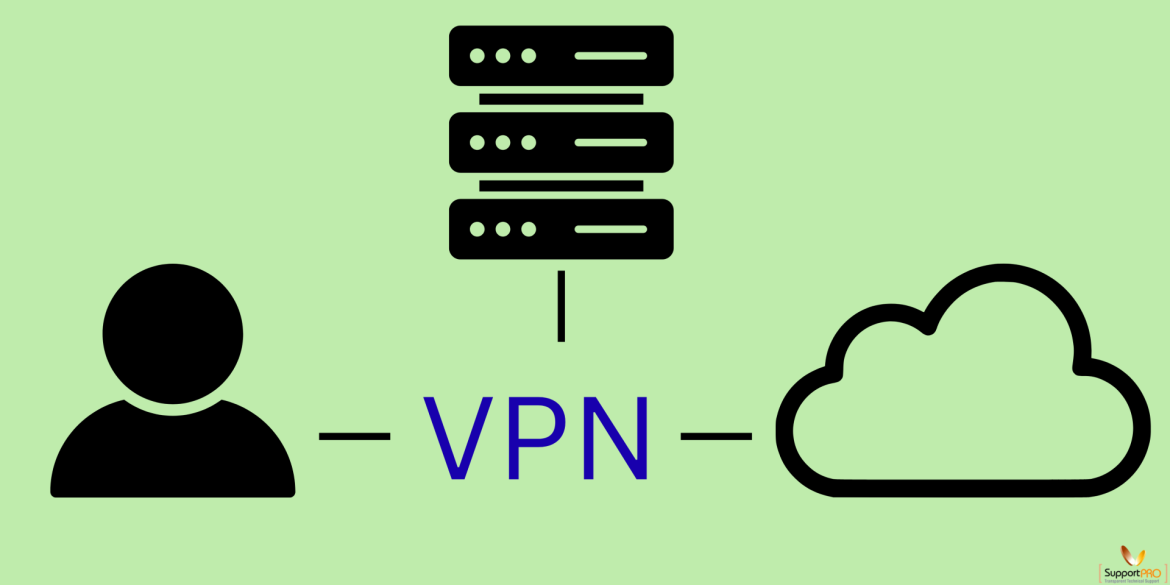
IP address spoofing, or IP spoofing, is the creation of Internet Protocol (IP) packets with a source IP address for the purpose of concealing the identity of the sender or impersonating another computing system. It’s a phenomena in which attackers changes or replicate IP packets. To dig deep, let’s understand some basic concepts. On the Internet, communication between two computers uses TCP/IP. In which data needed to be sent from one computer to another is broken down into pieces known as packets. These packets are numbered when broken down so they can be reassembled at the end or by the receiver. Each packet has two parts: header and body. The body carries the message, and the header stores metadata for the packet, such …
Some scripts/applications require certain scripts be run at a certain time to function properly. On Windows servers, we can set them up to run at certain times by creating a scheduled task (which is similar to how you can run cron jobs on Linux servers). Creating a Scheduled Task in Plesk: We can set up Scheduled Tasks in Plesk by doing the following: Log into Plesk The user you are logging in with should have enough permissions to create a scheduled task. Windows Shared customers automatically have permission, and the Admin user for Windows Dedicated Servers automatically have permission. Additional users created by the Admin on a Windows Dedicated Server may or may not have permission to set up scheduled …
SSH tunneling is used to tunnel all of the traffic from your local machine to a remote server that you have an account. SSH allows users to create TCP tunnels to send data over the network. The amazing thing about SSH tunnels is that they are encrypted. How tunneling works? This works by allocating a socket to listen to port on the local side, optionally bound to the specified bind_address. Whenever a connection is made to this port, the connection is forwarded over the secure channel, and a connection is made to host port from the remote machine. Port forwardings can also be specified in the configuration file. There are two ways to create an SSH tunnel: local and remote …