

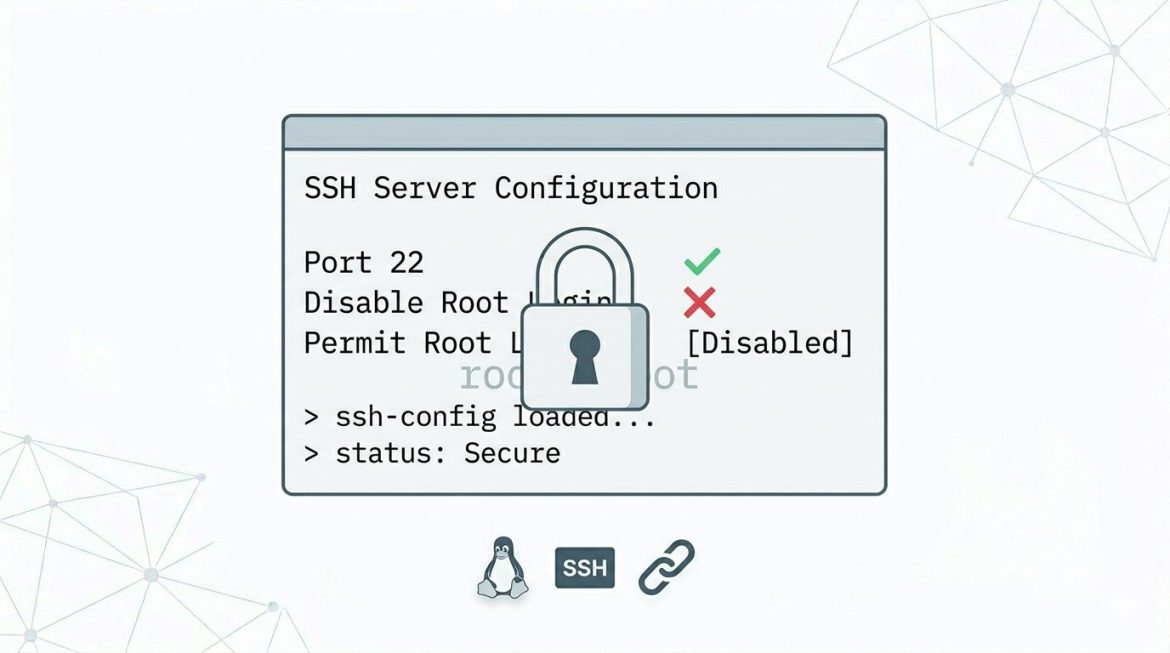
Public-key authentication is is based on the use of digital signatures. Each users have to create a pair of keys. ie public key and private key. Private key is owned by user and the public key is given to the server. When the user tries to authenticate, server check for the matching public key and sends a challenge to the user. Private key is used to authenticate the user, so never provide your private keys to others. If anyone got your private key, they can login to the server as you. So keep your private key file in a secure place and make sure that no one else has access to it. Secure Shell (SSH) public key authentication is used …
In order to get a valid SSL certificate, you will need to generate a CSR that a certificate signing authority (such as Verisign or Thawte) will request. You have to determine the URL for the secured web site – this should be a Fully Qualified Domain Name (FQDN), i.e. if you want to access your secured website through https://www.example.com/, then the FQDN of your website is www.example.com Select a few large and relatively random files on your server – compressed log files are a good start. These will act as your random seed enhancers. We refer to these as file1:file2:…:file5 below. Generate a key with the following command:
Creating a Virtual Private Server (VPS) using OpenVZ allows administrators to deploy lightweight virtual environments quickly and efficiently. This guide explains how to create, configure, and manage a Debian VPS, install Apache, PHP, MySQL, and deploy phpBB. Create a Debian VPS Using OpenVZ OpenVZ templates are typically stored in: Create a new VPS using the Debian minimal template: Important:Each VPS requires a unique container ID. Here, 157 is used as an example. Configure VPS Startup Enable automatic startup at system boot: Set Hostname and IP Address Assign hostname: Assign IP address: Configure Network and Resources Set socket limits: Add DNS nameservers: Alternatively, edit the container configuration file directly: Start and Access the VPS Start the container: Set the root password: …
Have you ever wondered why, when you access a website through a secure connection, you get a warning that the certificate is not issued by a trusted authority? In most cases, the exact warning message that you will get depends on your browser as follows: IE: The security certificate presented by this website was not issued by a trusted certificate authority! Firefox: The certificate is not trusted because the issuer certificate is unknown. (Error code: sec_error_unknown_issuer)
PERL MODULES What is Perl? Perl is a high-level programming language with an eclectic heritage written by Larry Wall and a cast of thousands. It derives from the ubiquitous C programming language and to a lesser extent from sed, awk, the Unix shell, and at least a dozen other tools and languages. Perls process, file, and text manipulation facilities make it particularly well-suited for tasks involving quick prototyping, system utilities, software tools, system management tasks, database access, graphical programming, networking, and world wide web programming. These strengths make it especially popular with system administrators and CGI script authors, but mathematicians, geneticists, journalists, and even managers also use Perl.
Mod_Perl 1. What is mod_perl ? 2. Working of mod_perl. 3. Advantage & Disadvantages of mod_perl. 4. Downloading and Installation. 5. Configuration. 6. Some common errors.
What Is smartd? smartd stands for SMART Disk Monitoring Daemon. It is part of the smartmontools package and continuously monitors the SMART (Self-Monitoring, Analysis and Reporting Technology) system built into modern hard drives and SSDs. SMART helps detect and report early warning signs of disk failure. By monitoring these indicators, smartd allows administrators to take preventive action before data loss occurs. smartd supports: How SMART Works SMART tracks several health indicators such as: When these values exceed safe thresholds, smartd can generate warnings via system logs or email notifications. smartmontools Project smartd is maintained as part of the smartmontools open-source project. Key Contributors The project is actively maintained and widely used across Linux, BSD, macOS, and Windows. Project site:https://sourceforge.net/projects/smartmontools/ Installing …
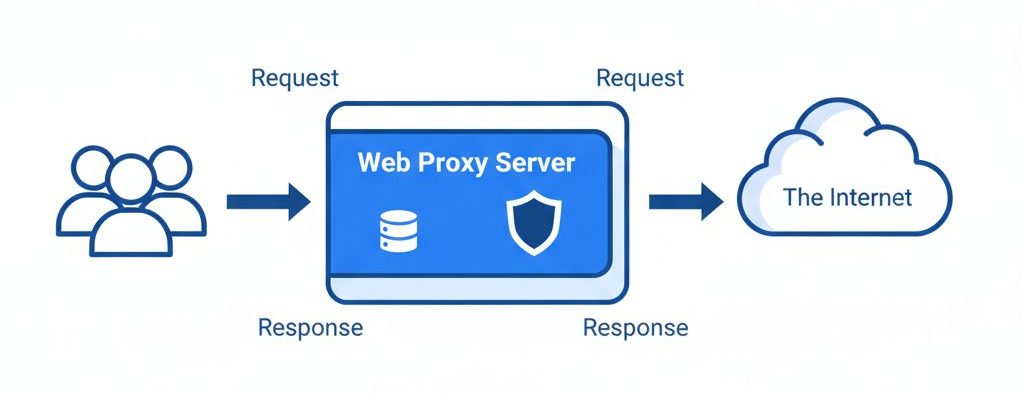
A proxy server is an intermediary application that sits between clients and servers. Instead of connecting directly to a website or service, a client sends requests to the proxy, which then forwards them to the destination server. Proxies are commonly used to: There are proxies for many protocols, including: This article focuses on web proxies, particularly using Squid. Understanding Web Objects and Caching What Are Web Objects? When discussing web proxies and caching, we often refer to objects. A web object can be: Each object is identified by a URL (Uniform Resource Locator). Note: A “web page” typically consists of multiple objects — the HTML file plus images, scripts, and stylesheets. How Caching Works Requests and Responses Here’s what happens …

Performance optimization is an important part of managing PHP applications and web servers. In earlier PHP environments, Alternative PHP Cache (APC) was one of the most widely used caching solutions for improving application speed and reducing server load. APC worked by storing compiled PHP bytecode in shared memory, eliminating the need to recompile PHP scripts on every request. This significantly improved performance for dynamic PHP applications. However, APC is now deprecated and unsupported in modern PHP environments. Today, OPcache and APCu are the recommended alternatives for PHP caching and performance optimization. In this blog, we’ll explain what APC was, how it worked, why it became obsolete, and which modern caching solutions should be used instead. What Is Alternative PHP Cache …
DHCP (Dynamic Host Control Configuration Protocol) Dynamic Host Configuration Protocol (DHCP) is a network protocol that enables a DHCP server to automatically assign an IP address to an individual computers TCP/IP stack software. DHCP assigns a number dynamically from a defined range of numbers configured for a given network.