
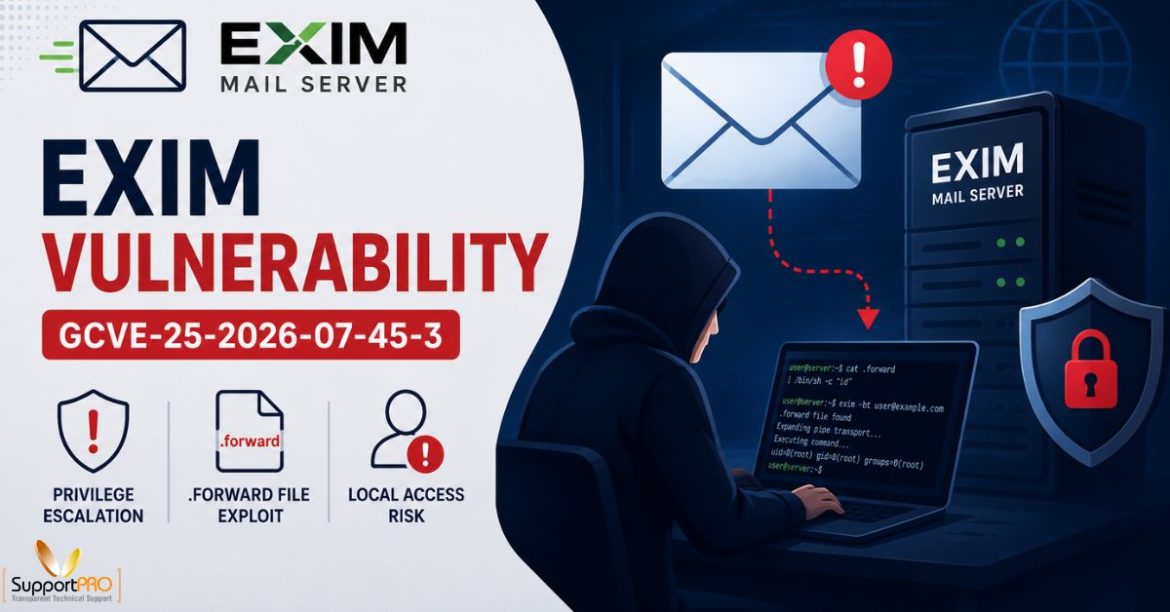
Email infrastructure is a critical part of modern IT environments, supporting everything from customer communication and password resets to automated system notifications. Exim, one of the most widely used Mail Transfer Agents (MTAs), powers email delivery for countless Linux servers and hosting platforms. Because of its widespread adoption, security vulnerabilities affecting Exim deserve immediate attention from system administrators. One such issue is GCVE-25-2026-07-45-3, a recently disclosed vulnerability involving Exim’s handling of .forward files under specific configurations. Unlike vulnerabilities that can be exploited remotely, this issue is classified as a local privilege escalation, meaning an attacker must already have access to a local user account before attempting exploitation. While this limits the attack surface, affected systems should still be patched promptly …
server management
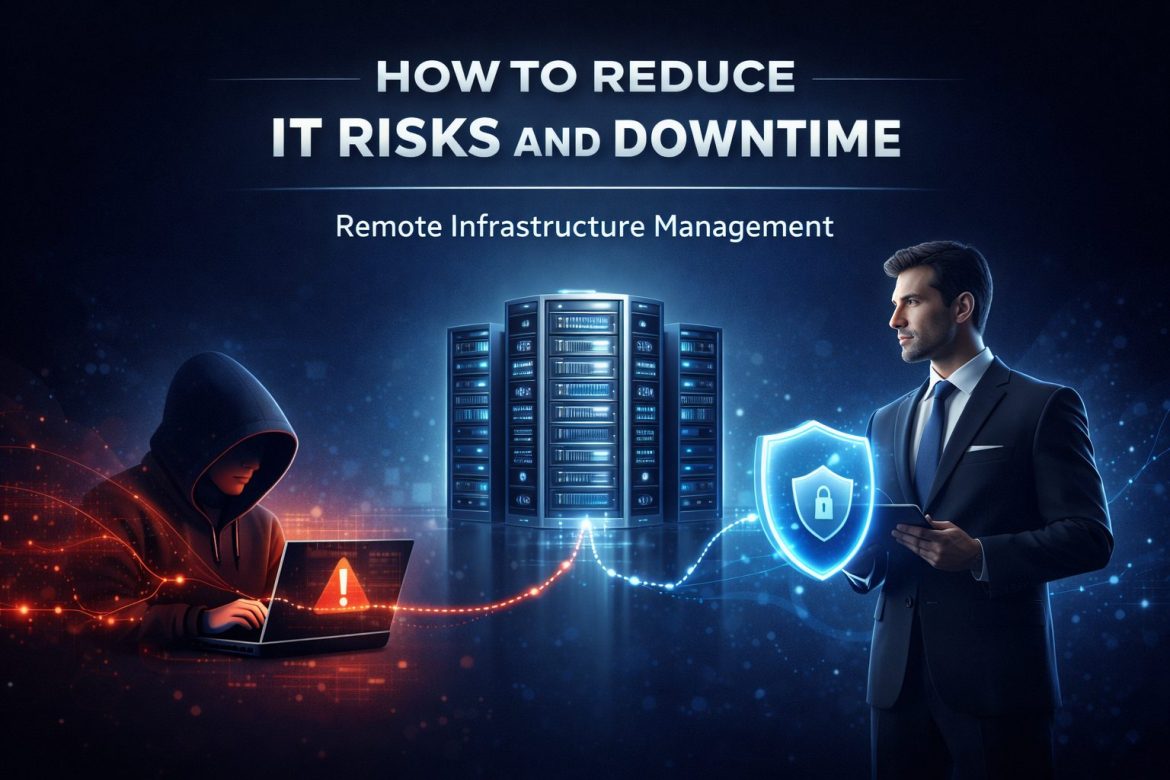
How to Reduce IT Risks and Downtime with Remote Infrastructure Management ?
IT downtime directly affects revenue, productivity, and customer trust. As infrastructure environments grow more complex, traditional IT management approaches struggle to maintain stability and security. Remote Infrastructure Management, or RIM, helps businesses reduce IT risks and downtime by providing continuous monitoring, proactive maintenance, and faster incident response. What Causes IT Risks and Downtime ? A large proportion of infrastructure failures stem from operational gaps that could be detected or mitigated earlier, alongside unavoidable external or platform level events. 1. Hardware failures Aging or overloaded hardware often exhibits early warning indicators (SMART errors, I/O latency, thermal alerts) that go unnoticed without proper monitoring. Without early detection, minor performance issues escalate into outages that disrupt business operations. 2. Patch delays Systems that …
Introduction In the cloud and hosting industry, effective server management is no longer optional. Today’s customers want the fundamentals: accurate billing, timely support, effective provisioning and uptime. To meet those expectations, managed service providers (MSPs), data centers and hosting companies need effective and efficient systems. For many years, WHMCS (Web Host Manager Complete Solution) has been the reliable automation platform for web hosting companies. It integrates billing, provisioning, and client support in one place. However, the true power of WHMCS stems from its vast array of add-ons. These modules turn the software into the nerve center of hosting business operations, beyond just billing. In this blog, we will look at why WHMCS is popular, the types of add-ons for server …
In an era where instant access to information is the norm, ensuring your website loads quickly is crucial for retaining visitors and improving search engine rankings. Users expect seamless, lightning-fast browsing, and even a slight delay can lead to increased bounce rates and lost conversions. Modern protocols like HTTP/3 and QUIC significantly enhance web performance by improving data transmission speed, security, and reliability. Unlike traditional HTTP versions that rely on TCP, HTTP/3 uses QUIC, which operates over UDP. This eliminates the latency caused by TCP’s handshake process and provides faster, more stable connections—especially useful for users on mobile or unreliable networks. CyberPanel, a modern web hosting control panel powered by OpenLiteSpeed, offers native support for HTTP/3 and QUIC. This integration …
Finding reliable server management companies in the USA can be challenging because every provider offers different features, pricing models, and technical expertise. The right partner can improve uptime, strengthen security, and ensure smooth infrastructure performance, while the wrong one can cause downtime, slow response times, and operational risk. This guide compares leading server management providers, explains their strengths, and shows how to choose the best partner for your business. Here are the leading companies: Why Server Management Matters for Businesses Success? Modern businesses rely on servers for applications, databases, websites, and internal systems. Without proper management, performance issues and vulnerabilities can quickly affect operations. Key benefits of professional server management: Questions to Ask Before Choosing a Provider What Services Do …
Modern infrastructure demands more than just uptime; it requires automation, proactive monitoring, airtight security, and scalability. The right server management tool helps businesses prevent downtime, optimize performance, and maintain complete control over their environments. Whether you’re an IT team managing enterprise systems, a hosting provider handling multiple clients, or a developer maintaining production servers, choosing the right software can dramatically improve efficiency and reliability. This guide compares the best server management tools available today, including their features, strengths, and ideal use cases. What Are Server Monitoring Tools? Server monitoring tools track the health and performance of your server. These tools provide real-time metrics on various server aspects such as CPU load, memory usage, and disk space. They can also alert …
Why Server Monitoring is Crucial for Business Continuity and Performance
In an increasingly digital landscape, maintaining the health and performance of servers is fundamental to any business’s success. As companies rely on online operations, e-commerce, cloud computing, and enterprise software, ensuring uninterrupted service and robust server performance is more critical than ever. Server monitoring is the first defense against issues that could disrupt business continuity and degrade performance. This blog will explore why server monitoring is essential, how it impacts business continuity, and the various aspects of server management that keep businesses running smoothly. What is Server Monitoring? Server monitoring refers to continuously checking and tracking a server’s performance, health, and status. This includes monitoring critical metrics such as CPU usage, memory consumption, disk space, network traffic, and uptime. The …
Maintaining your server’s health is crucial for your business’s smooth operation. A well-maintained server ensures that your applications and services run without interruptions, keeping your customers happy and your data secure. Here’s an easy-to-follow, 10-point server maintenance checklist that covers everything you need to keep your server in top shape. 1. Regular Backups Regular backups are the cornerstone of server maintenance. Without them, you risk losing critical data in the event of a failure. Ensure your backups are scheduled automatically and stored in a secure, off-site location. Test your backups periodically to confirm they can be restored successfully. Example: Imagine you run an e-commerce site, and your server crashes during a holiday sale. Regular server support and maintenance through backups …
Server Management: Importance, Best Practices & Benefits of Outsourcing
In today’s digital-first business environment, effective server management is essential for maintaining operational stability, security, and performance. Server management encompasses a wide range of activities including server setup, monitoring, maintenance, optimization, and troubleshooting, to ensure IT systems operate efficiently and securely across physical servers, virtual machines, and cloud infrastructure. For organizations that depend heavily on digital platforms and online services, properly managed servers play a critical role in minimizing downtime, protecting sensitive data, and delivering a seamless user experience. Without proactive server management, businesses risk performance bottlenecks, security vulnerabilities, unexpected outages, and rising infrastructure costs. As IT environments grow more complex, many businesses are turning to professional server management services to maintain reliable and scalable infrastructure. These services provide comprehensive …